


Senergy Direct separates the myths from the facts – and explains why the UK’s weather is far less of a barrier to solar power than most people think.
“But it’s always cloudy here.” It is the question we hear more than almost any other. And it is completely understandable – the UK’s reputation for grey skies and drizzle is well-earned, and the idea that solar panels could thrive in such conditions feels counterintuitive. But it is based on a misconception about what solar panels actually need in order to work.
The truth is that solar panels do not require blazing sunshine to generate electricity. They require light – and light, in sufficient quantities, is available in the UK on almost every day of the year. The UK’s solar resource is more substantial than most people realise, and modern panel technology is specifically designed to make the most of the diffuse, scattered light that characterises British skies.
In this guide, Senergy Direct takes you through everything you need to know about how solar panels perform in cloudy conditions, how the UK’s climate compares to countries already thriving on solar power, and what a realistic UK solar installation actually delivers across a full year. By the end, the cloudy-day concern should feel a great deal less daunting.
In This Guide We Answer:
- Why Do So Many People Assume Solar Panels Don’t Work in the UK?
- How Do Solar Panels Actually Generate Electricity – and Does It Require Direct Sunlight?
- What Happens to Solar Panel Output on an Overcast or Cloudy Day?
- How Does the UK’s Climate Compare to Sunnier Countries That Already Rely Heavily on Solar?
- What Is “Diffuse Radiation” – and Why Is It More Important Than Most People Realise?
- How Does Seasonal Variation in Sunlight Affect Annual Solar Energy Output in the UK?
- Can Battery Storage Solve the Problem of Low-Output Days – and How Does It Work?
- What Does a Realistic Annual Output Look Like for a UK Solar Installation?
- How Do You Size a Solar System to Perform Well in the UK’s Specific Conditions?
- What Should You Look for in a Solar Installer Who Truly Understands UK Performance?
1. Why Do So Many People Assume Solar Panels Don’t Work in the UK?
It is one of the most persistent myths in the renewable energy world: that the UK is simply too grey, too rainy, and too far north to make solar panels worthwhile. Walk into any conversation about home energy and the subject will come up within minutes. “But we don’t get enough sun, do we?” It is a reasonable instinct – but it is based on a fundamental misunderstanding of how solar panels actually work.
The perception has roots in the popular image of solar energy: vast arrays of panels under blazing Mediterranean or Californian sunshine, feeding power into sun-drenched cities. Against that backdrop, a semi-detached in Manchester or a farmhouse in Aberdeenshire does feel like an unlikely candidate for solar power.
The reality, as Senergy Direct sees every day through the installations they complete across the UK, is very different. The UK receives considerably more solar energy than most people assume – enough to make solar panels a genuinely effective and financially rewarding investment for the vast majority of properties. The misunderstanding is not about whether solar works in the UK; it is about what solar panels actually need in order to generate electricity.
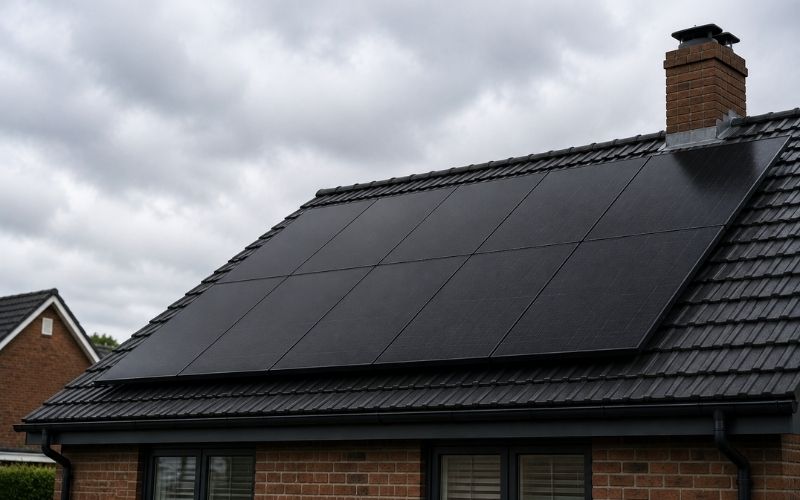
| Senergy Tip | The single most effective way to counter the “not enough sun” concern is to look at the data. The UK receives between 900 and 1,200 kWh of solar irradiance per square metre per year depending on location. Germany, the world’s fourth-largest solar market, receives a very similar figure. Ask Senergy Direct for a site-specific solar irradiance report for your property. |
2. How Do Solar Panels Actually Generate Electricity and Does It Require Direct Sunlight?
Solar panels generate electricity through a process called the photovoltaic effect. Each panel is made up of photovoltaic (PV) cells – typically constructed from silicon – which release electrons when struck by photons of light. This flow of electrons creates a direct current (DC), which is then converted to alternating current (AC) by an inverter, making it usable by the appliances in your home or business.
The critical point – and the one that most directly addresses the cloudy-day concern, is that solar panels respond to light, not to heat, and not specifically to direct sunlight. Photons are present in daylight even when the sky is heavily overcast. Diffuse light – the scattered, indirect light that reaches the earth’s surface on cloudy days — still contains enough photon energy to drive the photovoltaic process.

Direct Versus Diffuse Radiation
Solar radiation reaching the earth’s surface arrives in two forms: direct beam radiation (the sharp, direct rays of sunlight that cast shadows) and diffuse radiation (light scattered by clouds, particles in the atmosphere, and reflection from surrounding surfaces). On a clear day, direct radiation dominates. On a cloudy day, virtually all of the solar energy reaching a panel’s surface is diffuse — but it is still solar energy, and it still generates electricity.
Why This Matters for UK Homeowners and Businesses
The practical implication is significant. Your solar panels do not switch off when a cloud passes overhead. Output reduces — sometimes substantially on very heavy overcast days — but generation continues. A well-designed UK solar installation will generate electricity on the vast majority of days throughout the year, including in winter and including in the rainiest months.
| Senergy Tip | Modern high-efficiency solar panels, including the monocrystalline panels that Senergy Direct installs, perform particularly well under diffuse light conditions. The technology has advanced significantly in the past decade, and today’s panels are specifically engineered to capture a broad spectrum of light frequencies, not just the intense direct radiation of a clear summer day. |
3. What Happens to Solar Panel Output on an Overcast or Cloudy Day?
On a heavily overcast day, solar panel output typically falls to between 10% and 25% of its peak capacity. On a lightly overcast or hazy day – the kind of grey-bright weather that is actually very common across much of the UK – output is typically between 50% and 80% of the clear-sky figure. These are not trivial amounts of electricity.
To put it in concrete terms: a 4kW domestic solar installation in the south of England might produce around 16–20 kWh on a clear summer day. On a typical overcast autumn day, the same system might produce 4–8 kWh. That is still enough to power a household’s lighting, refrigeration, and a significant portion of its other daytime electricity use – without drawing a single unit from the grid.
The “Edge of Cloud” Effect
There is a phenomenon well known to solar installers and meteorologists that is sometimes called the “edge of cloud” or “cloud enhancement” effect. When the sun emerges from behind a cloud, the combination of direct solar radiation and the diffuse light reflected and scattered by the cloud edges can briefly cause a solar panel’s output to exceed its standard test condition rating. In the right conditions, output can spike to 110–120% of nominal capacity for short periods. The UK’s partly cloudy weather is actually ideal for this effect.

Annual Output Is What Matters Most
Individual cloudy days matter far less than annual cumulative output. Solar panels are sized and specified based on the total amount of solar energy available at a given location across a full year – not on what happens on any single day. A UK solar installation is designed to perform well across the full range of British weather, and the annual output figures it is sized against account fully for the country’s characteristic cloud cover.
| Senergy Tip | When Senergy Direct designs a solar installation, they use site-specific solar irradiance data and generation calculators to produce a predicted annual output figure. This figure is based on real historical weather data for your location – not an idealised sunny-day scenario. |
4. How Does the UK’s Climate Compare to Sunnier Countries That Already Rely Heavily on Solar?
One of the most compelling ways to address the “not enough sun” concern is to compare the UK directly with countries that have long been held up as solar success stories — and whose solar credentials are rarely questioned.
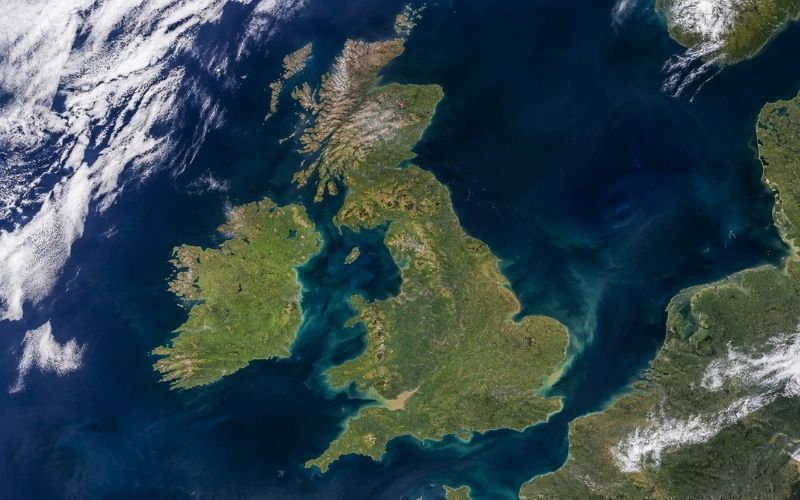
Germany is the most instructive comparison. Germany is one of the world’s leading solar energy nations, with one of the highest rates of rooftop solar panel installation per capita in the world. Germany’s solar sector is well-established, widely respected, and economically significant. And yet Germany receives very similar levels of solar irradiance to the UK — roughly 900 to 1,100 kWh per square metre per year in most regions.
The UK Versus Germany, France, and Beyond
The south of England, particularly Cornwall, Devon, and the counties around the Thames Estuary, receives solar irradiance levels comparable to parts of northern France and Belgium. Even Scotland and the north of England, which receive the least solar energy in the UK, sit broadly in the same range as Denmark and the Netherlands – both countries with active, well-established solar markets.
The conclusion is straightforward: the UK receives enough solar energy to make solar panels a sound investment. The question has never been whether the sun shines in the UK, but whether the solar energy that does arrive is sufficient to justify the investment. The data, and the experience of hundreds of thousands of UK solar installations, confirm that it is.
Where the UK Actually Excels
There is one climatic factor that actively benefits UK solar panels: temperature. Solar panels are semiconductor devices, and like most semiconductors, they perform better at lower temperatures. High temperatures actually reduce panel efficiency. The UK’s moderate climate means panels rarely overheat — and on cool, bright spring and autumn days, they can achieve some of their highest efficiency figures of the year.
| Senergy Tip | If you want to see the UK’s solar resource in context, the European Commission’s PVGIS tool (Photovoltaic Geographical Information System) allows you to enter any UK postcode and see the estimated annual solar energy output for a system of any size. Senergy Direct uses this tool as part of every site assessment — and the results consistently reassure customers who had assumed the UK was a poor solar prospect. |
5. What Is “Diffuse Radiation” and Why Is It More Important Than Most People Realise?
Diffuse radiation is the term for solar energy that has been scattered by the atmosphere, clouds, and other particles before it reaches the earth’s surface. On a clear day, roughly 80–85% of the solar energy reaching a panel is direct beam radiation and the remainder is diffuse. On a heavily overcast day, virtually all of the solar energy that penetrates the cloud cover arrives as diffuse radiation.
The reason this matters so much for the UK is simple: diffuse radiation is not useless radiation. It is lower in intensity than direct beam radiation, but it is spread across the entire sky — meaning it arrives at a solar panel from all directions, not just from the direction of the sun. A solar panel captures diffuse radiation from the whole visible sky dome, not just from the point where the sun happens to be.
How Much of UK Solar Energy Is Diffuse?
In the UK, diffuse radiation typically accounts for around 50–60% of total annual solar irradiance, compared to 30–40% in sunnier southern European climates. This means that UK solar panels are effectively optimised for diffuse light conditions — and modern high-efficiency panels are designed with this in mind, capturing a wide spectrum of wavelengths including those that predominate in scattered light.
Panel Technology and Diffuse Performance
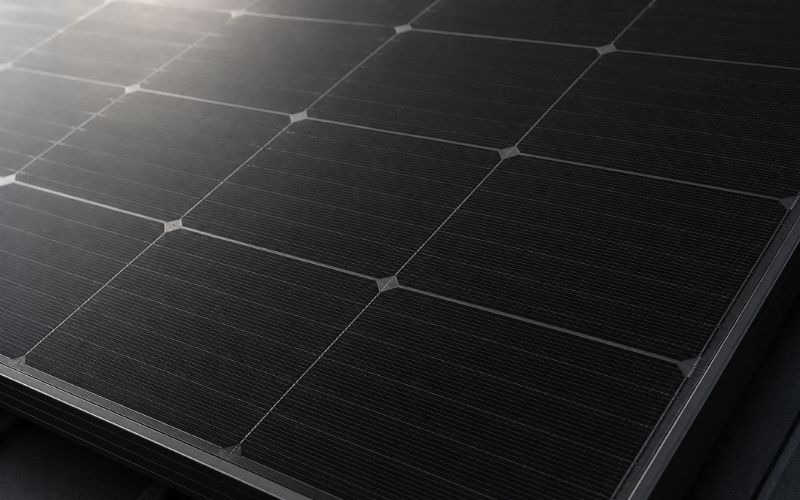
Not all solar panels perform equally well under diffuse light conditions. Monocrystalline silicon panels — which Senergy Direct specifies for all of its installations — have a higher efficiency under low-light and diffuse conditions than older polycrystalline panels. Some premium panel ranges also incorporate half-cell technology and anti-reflective glass coatings specifically designed to improve diffuse light capture.
The Practical Upshot
The practical upshot is that the UK’s frequently overcast skies are a much smaller obstacle to solar generation than most people assume. A system generating 50–80% of its clear-sky output on a typical grey day, across a full year of British weather, still produces a very substantial amount of electricity — enough to make a significant dent in most households’ and businesses’ energy bills.
| Senergy Tip | When comparing solar panel specifications, look at the low-irradiance efficiency rating — sometimes expressed as efficiency at 200 W/m² as well as the standard 1,000 W/m². This figure tells you how well a panel performs under the kind of overcast conditions that are common in the UK. Senergy Direct can walk you through the performance specifications of the panels they install and explain what they mean in real-world UK conditions. |
6. How Does Seasonal Variation in Sunlight Affect Annual Solar Energy Output in the UK?
The UK’s solar energy output varies significantly across the seasons — more so than in countries closer to the equator. In the summer months, long days and a high sun angle combine to produce periods of strong, sustained solar generation. In December and January, short days and a low sun angle mean that daily output is a fraction of its summer peak. This seasonal variation is one of the most important factors in understanding how a UK solar installation actually performs.
A typical UK solar installation produces roughly 60–70% of its annual energy output between April and September. The remaining 30–40% is generated across the October to March period. This asymmetry has implications for how you think about battery storage, grid export, and energy self-sufficiency throughout the year.
Summer: Long Days and High Output
In June and July, a well-positioned UK solar installation can generate electricity for 16 or more hours per day. Peak output occurs around solar noon — typically between 11am and 1pm depending on your location — but generation continues from early morning to early evening. On a clear summer day, a domestic 4kW system might generate 20–25 kWh, comfortably exceeding average household daily consumption.
Winter: Short Days but Not Zero Output
In December, the sun rises late, sets early, and never climbs far above the horizon. Daily output from a 4kW system might be just 1–3 kWh on a winter day — perhaps 10–15% of its summer peak. However, this does not mean winter solar generation is worthless. Every unit generated in winter is a unit you do not need to buy from your energy supplier, at prices that remain elevated.
Spring and Autumn: The Overlooked Sweet Spot
March to May and September to October are arguably the most efficient months for UK solar. Days are lengthening or still reasonably long, the sun is at a useful angle, temperatures are cool (which boosts panel efficiency), and many days combine good brightness with the kind of varied cloud cover that can produce the edge-of-cloud enhancement effect. Senergy Direct consistently sees strong generation data from these months in their customers’ monitoring reports.
| Senergy Tip | Do not judge your solar installation’s performance by a single winter month. Solar panels are a year-round investment, and the annual output figure — not the January figure — is the one that determines whether the system is performing to specification. Senergy Direct provides all customers with monitoring tools so you can track cumulative annual output and compare it against the predicted figure. |
7. Can Battery Storage Solve the Problem of Low-Output Days – and How Does It Work?
Battery storage is increasingly being installed alongside solar panels – and for good reason. It directly addresses the most practical challenge that cloud cover and seasonal variation create: the mismatch between when your solar panels generate electricity and when you actually want to use it.
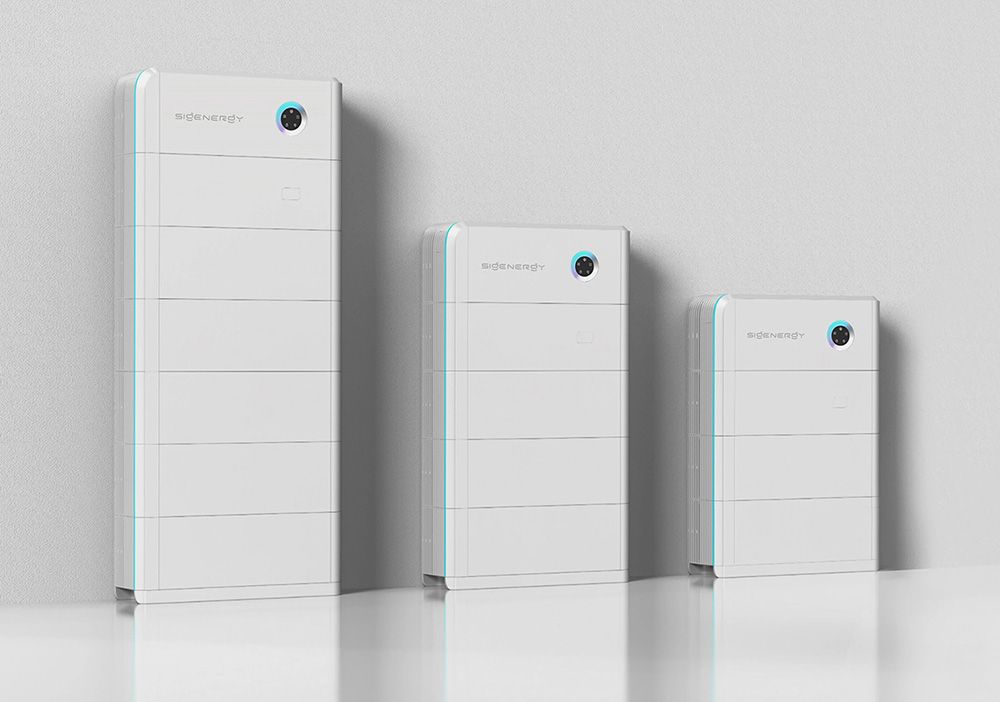
A solar battery stores excess electricity generated during periods of high output – typically sunny spells during the day — and makes it available during periods of low or zero generation, such as cloudy afternoons, evenings, and overnight. In the context of the UK’s variable weather, this is a genuinely valuable capability.
How a Solar Battery Works in Practice
During daylight hours, your solar panels generate electricity. If generation exceeds your immediate consumption – as it often does during sunny periods when occupants are out at work or school — the surplus charges the battery rather than being exported to the grid. When generation falls below consumption (due to cloud cover, or simply because the sun has gone in), the battery discharges to meet the shortfall. Only once the battery is depleted does the system draw from the grid.
The Impact on Self-Sufficiency
A typical domestic solar installation without battery storage might achieve 30–40% self-sufficiency – meaning it meets 30–40% of the household’s annual electricity consumption from solar generation. Adding a battery of appropriate capacity can increase that figure to 60–80% or more, depending on the household’s usage patterns and the size of the solar array.
Battery Storage on Cloudy Days Specifically
On consecutive cloudy days — the kind of extended grey spells that the UK does occasionally experience — a battery that was charged during the preceding sunny period provides a meaningful buffer. It will not provide unlimited energy indefinitely, but it significantly extends the period over which a household or business can operate predominantly on stored solar power rather than grid electricity.
| Senergy Tip | Battery storage may not be right for every installation, and the financial case depends on your energy usage patterns, tariff structure, and the size of your solar array. Senergy Direct conducts a detailed energy usage analysis before recommending battery storage, ensuring the system is sized correctly for your specific circumstances rather than simply adding capacity for its own sake. |
8. What Does a Realistic Annual Output Look Like for a UK Solar Installation?
Annual output is the single most important performance metric for any solar installation — and understanding what a realistic figure looks like for your location and system size is essential for assessing the financial case.
In the solar industry, annual output is typically expressed in kilowatt hours per kilowatt peak (kWh/kWp) – a figure that allows fair comparison between systems of different sizes and in different locations. In the UK, this figure typically ranges from around 800 kWh/kWp per year in the far north of Scotland to around 1,100 kWh/kWp per year in the sunniest parts of the south coast.
What This Means for a Typical Home
A typical domestic solar installation in the UK is 3.5–4kW in size. At a mid-range specific yield of 950 kWh/kWp, a 4kW system would generate approximately 3,800 kWh per year. The average UK household consumes around 3,500 kWh of electricity per year – meaning a well-sized installation can, in theory, generate more electricity over the course of a year than the household consumes, even accounting for the UK’s cloud cover and seasonal variation.
What This Means for a Business
Commercial solar installations are typically larger, often 10kW to 100kW or more, and the financial case is strengthened by the fact that business electricity consumption tends to be concentrated during daytime hours, which aligns well with solar generation patterns. A 20kW commercial installation generating 19,000 kWh per year replaces electricity that would otherwise be purchased at commercial rates, producing significant and predictable annual savings.
Year-on-Year Consistency
One of the most reassuring aspects of solar generation data is its year-on-year consistency. Whilst individual days and months vary considerably, annual output figures tend to be remarkably stable. A system that generates 3,800 kWh in its first year will typically generate 3,700–3,900 kWh in subsequent years, with a slow decline of around 0.5% per year as panels age. This predictability makes solar a particularly reliable long-term investment.
| Senergy Tip | Ask any solar installer for their predicted annual output figure in kWh, not just the system size in kWp. The kWh figure is what actually determines how much you save on your electricity bill. Senergy Direct provides a detailed generation estimate for every installation, broken down by month, so you know exactly what to expect across the full year. |
9. How Do You Size a Solar System to Perform Well in the UK’s Specific Conditions?
Designing a solar installation that performs well in the UK requires more than simply placing as many panels as possible on a roof. The UK’s variable weather, seasonal extremes, and relatively modest peak irradiance levels all influence how a system should be sized, oriented, and specified – and getting these decisions right makes a significant difference to annual output and financial return.
The starting point for any proper UK solar design is an accurate assessment of the solar resource at the specific site. This means looking at the property’s latitude, the orientation and pitch of the available roof surfaces, any shading from trees, neighbouring buildings, or chimneys, and the historical solar irradiance data for the location.
Orientation and Pitch
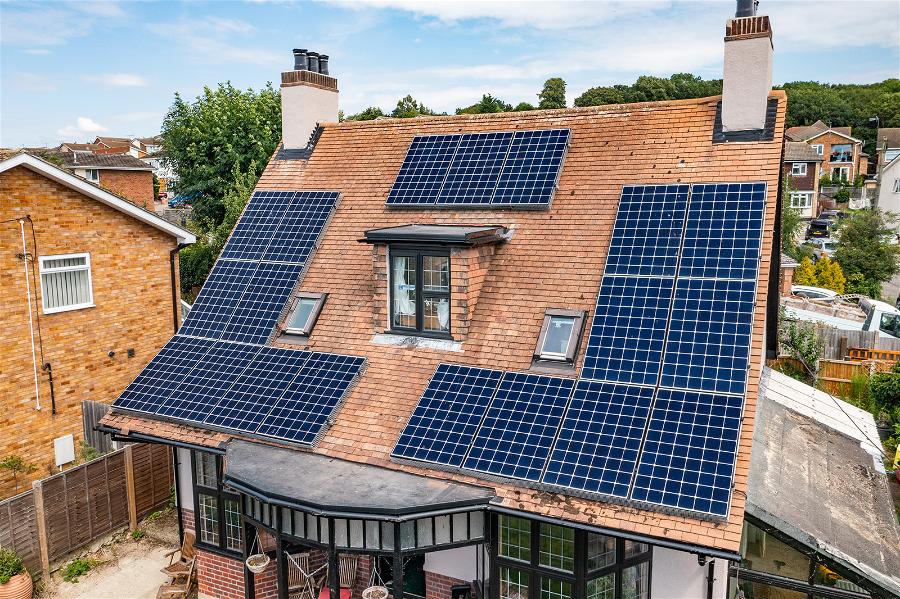
In the UK, a south-facing roof at a pitch of around 30–35 degrees is optimal for annual solar energy capture. However, east- and west-facing roofs are far from write-offs — they generate around 80–85% of the output of an equivalent south-facing installation, and in some cases they produce a more useful generation profile by spreading output more evenly across morning and evening rather than concentrating it around midday.
Inverter Sizing and String Design
In the UK, where panels frequently operate below their peak rated output due to cloud cover, inverter sizing is particularly important. Oversizing the solar array relative to the inverter — a technique known as DC oversizing or clipping — can improve system performance on low-irradiance days, allowing the inverter to operate closer to its optimal efficiency range more consistently throughout the year.
Panel Selection for UK Conditions
As discussed earlier, panel technology matters. Monocrystalline panels with high low-irradiance efficiency ratings, anti-reflective coatings, and half-cell or multi-busbar designs are better suited to UK conditions than older polycrystalline technology. Senergy Direct selects panels specifically for their performance profile in low-light and diffuse conditions, not just their peak output rating.
| Senergy Tip | Be cautious of solar quotes that are based purely on the number of panels that will fit on your roof. A well-designed UK installation considers orientation, shading, inverter configuration, and panel technology together — not just maximum panel count. Senergy Direct’s design process starts with a detailed site survey and produces a system specification optimised for your specific roof and location. |
10. What Should You Look for in a Solar Installer Who Truly Understands UK Performance?
The solar industry in the UK has grown rapidly, and with growth has come variation in the quality of installation and advice available. Choosing an installer who genuinely understands UK solar performance — rather than one applying a one-size-fits-all approach designed for sunnier climates — can make a meaningful difference to the output and longevity of your system.
There are several markers of a solar installer who takes UK-specific performance seriously. The first is transparency about expected output. Any reputable installer should be able to provide you with a site-specific predicted annual generation figure, in kWh, calculated using MCS-accredited methodology and real local irradiance data — not a generic estimate based on average UK figures.
MCS Certification and Quality Standards
MCS (Microgeneration Certification Scheme) certification is the UK’s recognised quality standard for small-scale renewable energy installations. An MCS-certified installer has met rigorous competency requirements and uses MCS-approved methodology for system design and output estimation. MCS certification is also required for your installation to be eligible for the Smart Export Guarantee — the scheme that pays you for surplus electricity exported to the grid.
Post-Installation Monitoring and Support
A good UK solar installer does not disappear after commissioning. They should provide you with access to a monitoring system that allows you to track your installation’s output in real time and compare it against the predicted annual figure. If performance falls below expectations — which can happen due to shading, soiling, or equipment issues — you want to know about it quickly, not at your annual review.
Why Senergy Direct?
Senergy Direct is a specialist solar and renewable energy installer with deep expertise in UK solar performance. Their team designs every installation from the ground up, using site-specific irradiance data, carefully selected high-performance panels, and a commissioning process that ensures every system operates at its full potential from day one. They are MCS-certified, provide full post-installation monitoring, and are committed to honest, evidence-based advice — including about what solar can realistically achieve in the UK’s climate.
| Senergy Tip | Before agreeing to any solar installation, ask the installer two simple questions: what is the predicted annual output of this system in kWh, and what methodology did you use to calculate it? A reputable installer will answer both questions clearly and confidently. If the answer is vague or the figure seems unusually high, treat it as a warning sign. |
Find Out What Solar Could Do for Your Property
Senergy Direct specialises in solar panel installations designed and optimised for UK conditions. Every installation starts with a detailed site survey and a site-specific performance estimate – so you know exactly what to expect before you commit. No assumptions, no generic figures, no surprises.
Whether you are a homeowner curious about solar for the first time or a business owner looking to reduce energy costs and carbon footprint, Senergy Direct has the expertise, technology, and track record to deliver a system that performs — whatever the British weather has in store. Get in touch today!
Frequently Asked Questions
Here are the questions Senergy Direct hears most often from people wondering how solar panels cope with the British weather — with clear, honest answers.
Do Solar Panels Work in the Rain?
Yes. Rain does not stop solar panels from generating electricity – the panels respond to daylight, and daylight is present even during rainfall. In fact, rain has a beneficial side effect: it washes dust, pollen, and other debris from the panel surface, which can actually improve output after a rainy period compared to a prolonged dry spell. The UK’s regular rainfall helps keep panels clean and operating efficiently.
What Temperature Is Best for Solar Panel Performance – Is Hotter Always Better?
Counterintuitively, solar panels perform better at lower temperatures. They are rated at a standard test condition of 25°C, and efficiency declines above this temperature — typically by around 0.3–0.5% per additional degree Celsius. On a very hot day, panel temperatures can reach 50–70°C, reducing output by 10–20% compared to the same irradiance on a cool day. The UK’s moderate climate is actually well-suited to solar panel efficiency.
Do Solar Panels Generate Any Electricity at Night?
No. Solar panels require light to generate electricity, and in the absence of any meaningful light source, they produce nothing at night. This is why battery storage is valuable — it allows electricity generated during the day to be stored and used after dark. Without a battery, any electricity needed at night must be drawn from the grid in the normal way.
Which Parts of the UK Get the Most Solar Energy?
The south-west of England — particularly Cornwall and Devon — receives the most solar energy in the UK, with annual irradiance of around 1,100 kWh/m² or more. The south coast, Essex, East Anglia, and the Thames Estuary also perform well. Scotland and the north of England receive somewhat less — typically 850–950 kWh/m² — but this is still sufficient for solar panels to be a worthwhile investment, as demonstrated by the large number of successful installations across these regions.
Do Solar Panels Work Better in Winter or Summer?
Solar panels generate significantly more electricity in summer than in winter, due to longer days and a higher sun angle. In the UK, a solar installation typically generates around five to six times more electricity in June than in December. However, cool, bright winter days can produce surprisingly good output, and panels can operate more efficiently in cold temperatures. Winter generation is lower in absolute terms but is not negligible.
What Is a Solar Panel’s “Peak Output” and When Does It Actually Achieve It?
A solar panel’s peak output — expressed in watts peak (Wp) — is the maximum power it can produce under standard test conditions: 1,000 W/m² of irradiance at 25°C. In the UK, conditions rarely reach exactly these parameters, so panels seldom produce their precise rated peak output. However, on cool, bright days — particularly in spring and autumn — conditions can be close to optimal, and the edge-of-cloud effect can briefly push output above the rated figure.
Can Snow on Solar Panels Cause Damage or Stop Them Working?
A light covering of snow will temporarily reduce or stop output, but it generally slides off quickly due to the smooth glass surface and the slight warmth the panels themselves generate. Heavy snowfall may cover panels for longer, but this is rare in most parts of the UK and short-lived. Snow does not cause damage to well-installed solar panels. It is worth noting that snow on the ground can actually reflect additional light onto the panels, temporarily boosting output once the panel surface itself is clear.
Does Pollution or Haze Affect How Much Electricity Solar Panels Produce?
Yes, atmospheric pollution, haze, and particulates in the air can reduce the amount of solar radiation reaching panel surfaces, particularly in urban areas. However, in the UK, this effect is generally modest compared to the impact of cloud cover. Panel soiling — the gradual build-up of dust, pollen, and pollution on the glass surface — can reduce output by a few percent over time, which is one reason why regular rainfall (a feature the UK has in abundance) is beneficial for maintaining panel performance.
How Do I Know If My Solar Panels Are Underperforming on Cloudy Days?
The best way to assess performance is through a monitoring system that records your installation’s output in real time and compares it against the predicted generation for each day and month. Senergy Direct provides all customers with access to monitoring tools that make this straightforward. If your system consistently produces significantly less than predicted under similar weather conditions, it may indicate a fault, shading issue, or soiling problem that warrants investigation.
Is It Still Worth Getting Solar Panels If I Live in Scotland or the North of England?
Yes, emphatically. Scotland and the north of England receive less solar energy than the south, but the difference is smaller than most people assume — typically 15–20% less annual irradiance than the sunniest parts of the country. The financial case for solar in these regions remains strong, particularly given the high cost of grid electricity. Senergy Direct has completed successful installations across the full length of the UK and can provide location-specific output estimates and financial projections for any site.
Disclaimer: This article is intended for general informational purposes only. Solar panel performance figures quoted are indicative and based on typical UK conditions — actual output will vary depending on location, installation, panel specification, shading, and other site-specific factors. Always obtain a site-specific performance assessment from a qualified MCS-certified installer before making any investment decision. Senergy Direct accepts no liability for actions taken or not taken based on the contents of this article.

