


Senergy Direct explains how solar and EV charging work together — and how to set up your home to drive on sunshine as cheaply as possible.
The appeal of the idea is obvious: solar panels on your roof, an electric car on your driveway, and the electricity flowing seamlessly from one to the other without ever passing through the grid or arriving as a bill. Driving on sunshine. With over 1.5 million fully electric cars now on UK roads and solar installations growing faster than at any point in the past decade, the question of whether solar panels can charge an electric car is being asked by more people than ever — and the answer, in short, is yes.
But the more useful question is not simply whether it can be done, but how to do it most effectively and most cheaply. The technology involved — solar divert chargers, home batteries, and smart EV tariffs — has advanced significantly in recent years, and the optimal setup for a solar-and-EV household in 2026 is more sophisticated and more financially rewarding than most people realise. Getting the configuration right can reduce the effective cost of charging to 1–3p per mile. Getting it wrong means missing thousands of pounds in savings over the life of the system.
In this guide, Senergy Direct — an MCS-certified solar and EV charger installer based in Basildon, serving Essex and the surrounding area — explains everything you need to know about combining solar panels and EV charging. From the basics of how electricity flows between your roof and your car, through solar divert chargers, battery storage, tariff strategy, and financial savings, this is the complete guide for any Essex homeowner thinking about the solar and EV combination.
In This Guide We Answer:
- The Simple Answer – and Why the Smarter Question Is How to Do It Most Efficiently
- How Solar Panels Actually Power an Electric Car — the Basics Explained
- How Many Solar Panels Do You Need to Cover Your Annual Driving?
- What Is a Solar Divert Charger — and Why Is It the Key Piece of the Puzzle?
- The Solar Surplus Question: Is It Better to Charge Your Car Directly or Export and Use a Cheap Tariff?
- How Battery Storage Fits into a Solar and EV Charging Setup
- How Much Can You Realistically Save Combining Solar Panels with EV Charging?
- Do You Need to Have Solar Panels Already, or Can You Install Everything Together?
- What Does the Ideal Solar and EV Setup Look Like for an Essex Home?
- How Senergy Direct Helps Essex Homeowners Build the Complete Solar, Battery, and EV Package
1. The Simple Answer – and Why the Smarter Question Is How to Do It Most Efficiently
Yes — solar panels can charge an electric car. The principle is straightforward: solar panels generate electricity, electric cars run on electricity, and connecting the two intelligently means your car can be powered by your own roof rather than the grid. In a country where over 1.5 million fully electric cars were on UK roads by mid-2025 and solar panel installations are growing faster than at any point in the past decade, the combination of home solar and EV charging is becoming one of the most financially compelling home energy decisions available.
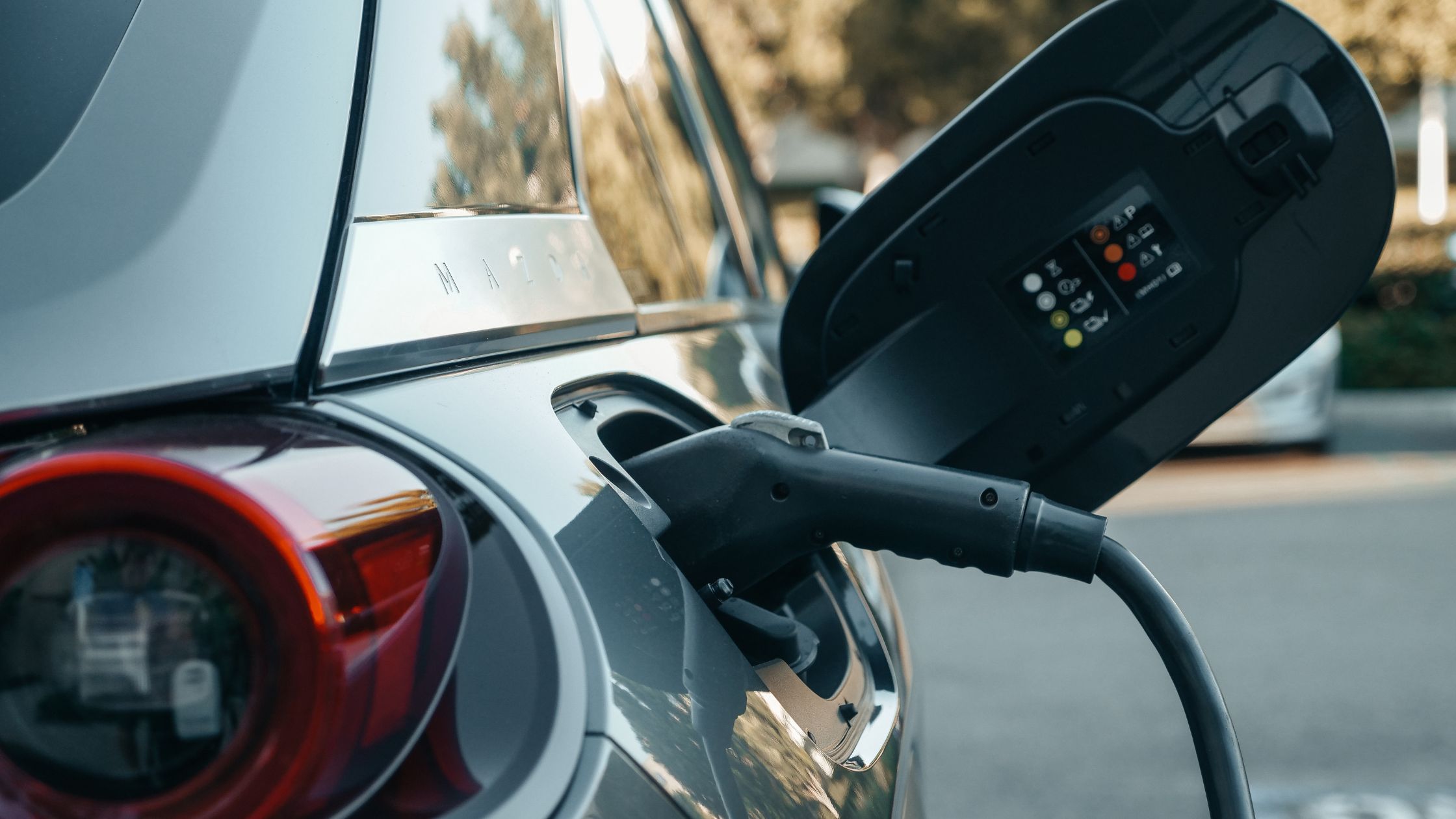
But the really useful question is not whether it can be done — it can — but how to do it most efficiently for your specific home, driving habits, and energy tariff. The answer to that question has become significantly more nuanced in recent years, because the rise of smart EV tariffs, solar divert chargers, and home battery storage means there are now multiple ways to combine solar and EV charging, each with different financial implications.
Senergy Direct installs solar panels, battery storage, and EV chargers for Essex homeowners and businesses, and the integrated solar-and-EV setup is one of the most requested combinations their team now works on. This guide explains how solar EV charging works, how many panels you need, which equipment matters, how the finances stack up, and how to build the optimal setup for your home.
| Senergy Tip | If you are considering both solar panels and an EV charger, installing them at the same time is almost always more cost-effective than doing them separately. A combined installation shares scaffolding costs, allows the system to be designed as an integrated whole from the outset, and means the EV charger can be specified to work intelligently with your solar system from day one. Senergy Direct designs and installs solar, battery, and EV charger packages as a single integrated project. |
2. How Solar Panels Actually Power an Electric Car — the Basics Explained
Understanding how solar panels and an EV charger work together requires a brief look at how electricity flows through a solar-equipped home. Solar panels generate direct current (DC) electricity, which a solar inverter converts to alternating current (AC) — the form used by every appliance in your home, including your EV charger. During daylight hours, this solar-generated AC electricity flows into your home’s electrical system and powers whatever is running at that moment.
When solar generation exceeds the home’s immediate demand — which happens regularly during sunny periods, particularly on spring and summer days when occupants may be out — the surplus electricity has to go somewhere. Without special equipment, it is exported to the grid at Smart Export Guarantee rates of typically 5–15p per kWh. With a smart EV charger configured to detect surplus solar, that surplus is diverted into your car’s battery instead — charging your vehicle using electricity that would otherwise have been sold cheaply to the grid.
The Flow of Electricity in a Solar and EV Home
In a well-configured solar and EV home, the priority order for electricity use is: first, power whatever is running in the home at that moment; second, charge the home battery (if one is installed); third, divert surplus to the EV charger; and fourth, export anything remaining to the grid. This hierarchy maximises the financial value of every unit of solar electricity generated — using it for the highest-value purpose first before falling back to grid export at the lowest rate.
At night, or during periods when solar generation is insufficient, the EV charges from whatever source is most cost-effective — the home battery if it contains stored solar, or the grid at the cheapest available rate (typically overnight on a time-of-use tariff). Modern energy management systems can automate all of this without any manual intervention, so the household simply plugs in the car and the system handles the rest.
Why You Cannot Just Plug a Car into Solar Panels Directly
It is worth addressing a common misconception: you cannot simply run a cable from your solar panels to your car. Solar panels produce variable DC electricity — the voltage and current fluctuate constantly with cloud cover and sun angle — whilst an EV charger requires stable, regulated power. The inverter, the home’s AC circuit, and a purpose-designed EV charger are all essential components in the chain. A smart EV charger is additionally important because it manages the charging current in response to available solar surplus, preventing the charger from drawing from the grid when no surplus is available.
| Senergy Tip | The single most important piece of equipment for solar EV charging is not the charger itself — it is the energy management or solar monitoring system that allows the charger to see how much surplus solar is available in real time. Senergy Direct specifies solar systems with appropriate monitoring capability and pairs them with compatible smart EV chargers, ensuring the two components communicate correctly from the moment the installation is complete. |
3. How Many Solar Panels Do You Need to Cover Your Annual Driving?
One of the most practical questions for any EV owner considering solar is how many panels are needed to generate enough electricity to cover their annual driving. The answer depends on three variables: how far you drive each year, how efficiently your EV converts electricity to miles, and how much electricity your solar panels generate at your specific location.
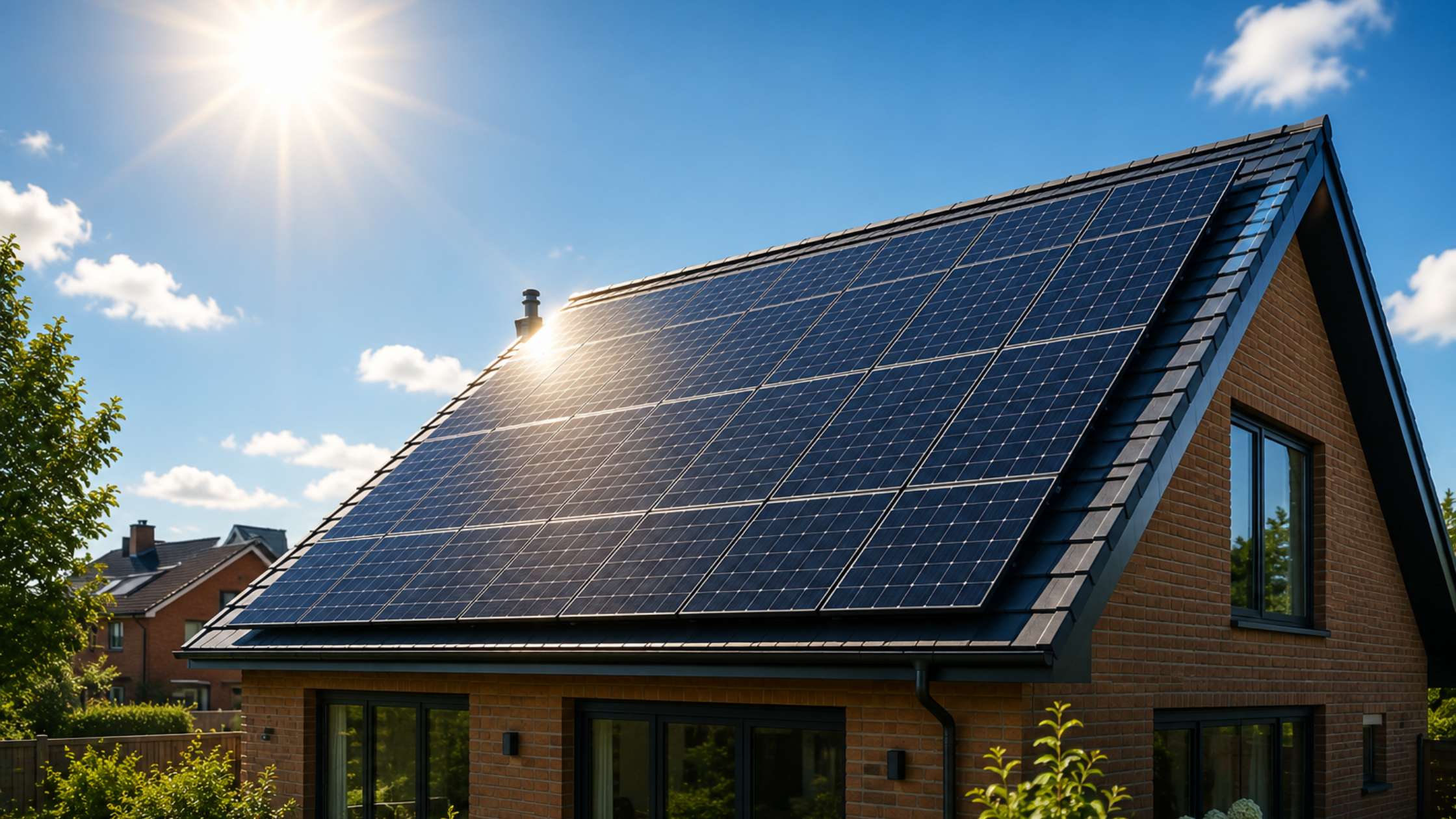
The average UK driver covers around 7,400 miles per year. Electric vehicle efficiency varies by model — a small, aerodynamic car like a Tesla Model 3 or a Vauxhall Corsa Electric might achieve 3.5–4.5 miles per kWh, whilst a larger SUV like a Ford Mustang Mach-E or a Kia EV6 might achieve 3.0–3.5 miles per kWh. For the average mileage, that translates to an annual electricity demand for driving of approximately 1,600–2,500 kWh, depending on the vehicle.
The Panel Count Calculation
In Essex, solar panels generate approximately 970 kWh per kilowatt peak (kWp) of installed capacity per year — slightly above the UK national average, reflecting the county’s favourable solar irradiance. A standard 450W panel in Essex therefore generates around 437 kWh per year. To cover 2,200 kWh of annual EV charging demand (representing average mileage in a moderately efficient car), you would need approximately 2,200 ÷ 437 = 5 panels dedicated to EV charging.
In practice, of course, the solar system also powers the household — it is not possible to designate specific panels exclusively for EV use. The more useful framing is: how much additional solar capacity is needed to cover EV demand on top of the household’s existing electricity consumption? For a household already considering a 4kWp (9-panel) system for household use, adding sufficient capacity to also cover average annual EV mileage would typically require an additional 1–3 panels, bringing the total to 10–12 panels (4.5–5.4kWp).
The Mismatch Between When Solar Generates and When You Drive
There is an important caveat to any panel count calculation for EV charging: the timing mismatch. Solar panels generate most electricity in summer, between roughly 10am and 3pm. Most people charge their EVs in the evening or overnight when they return home. Without battery storage, the solar electricity generated during the day cannot directly power overnight EV charging — it would need to be exported and then reimported, or replaced by grid electricity at night.
This mismatch does not make solar EV charging unworkable — it just means the equation is more complex than simply matching annual generation to annual demand. Smart chargers, battery storage, and time-of-use tariffs are the tools for bridging that mismatch, and they are discussed in the sections that follow.
| Senergy Tip | If you are sizing a new solar system partly to cover EV charging, tell Senergy Direct your annual mileage and vehicle model at the outset. They will incorporate the EV’s electricity demand into the system sizing calculation alongside your household consumption, ensuring the total system is sized for your complete energy profile rather than just the home. Adding the EV demand at the sizing stage costs far less than retrofitting additional panels later. |
4. What Is a Solar Divert Charger — and Why Is It the Key Piece of the Puzzle?
A solar divert charger — sometimes called a solar-aware or solar-integrated EV charger — is a home EV charging unit that can detect the surplus solar electricity your system is generating in real time and automatically adjust the charging rate to use that surplus rather than drawing from the grid. Without a solar divert charger, your standard EV charger simply draws electricity from the grid at whatever rate it needs, regardless of whether your solar panels are generating surplus at that moment.
The financial significance of this capability is substantial. Every unit of surplus solar electricity that is diverted into your car rather than exported to the grid is worth approximately the difference between the cost of grid electricity (around 24–27p per kWh in 2026) and the Smart Export Guarantee rate you would have received for exporting it (5–15p per kWh). That difference — of 10–20p per unit — is the direct financial benefit of solar divert charging over unmanaged charging from the grid.
How Solar Divert Mode Works
A solar divert charger works by monitoring the electricity flowing in and out of your home through a current clamp sensor fitted to the incoming supply cable. When it detects that generation is exceeding consumption — meaning surplus electricity is about to be exported — it uses that surplus to start or increase the EV charging rate instead. As clouds pass over and generation drops, the charger reduces its charging rate or pauses to avoid drawing from the grid. The process is continuous and automatic, adjusting every few seconds in response to changing solar conditions.
In practice, solar divert mode on a sunny summer day can deliver two to six hours of EV charging using nothing but solar surplus — effectively free, once the solar system has paid for itself. On overcast days or in winter, the surplus available is smaller and charging sessions from solar alone will be shorter, but any solar divert charging that does occur is still at significantly lower effective cost than charging from the grid.
Leading Solar Divert Chargers Available in the UK
The most widely used solar divert chargers in the UK in 2026 include the myenergi Zappi — the market leader, available in several variants and compatible with most solar systems and all major EV brands; the Ohme Home Pro — which combines solar divert capability with smart tariff integration and a particularly user-friendly app; the Indra Smart PRO — another well-regarded option with strong solar integration; and the Hypervolt Home 3 Pro, which offers Bluetooth-based solar monitoring. All of these chargers can operate in standard (full-power grid) mode, solar-only mode, or a hybrid mode that uses all available solar surplus and tops up from the grid to a minimum charge level you set.
Compatibility with Your Solar System
Most solar divert chargers use a CT clamp sensor rather than direct communication with the solar inverter, which means they are compatible with virtually any solar system regardless of brand or age. Some premium chargers also offer direct API integration with specific inverter brands, which enables more precise and faster response to surplus changes. Senergy Direct specifies solar divert chargers that are compatible with the inverter and monitoring system of the solar installation they are fitting, ensuring seamless integration from day one.
| Senergy Tip | If you are installing a solar system and already have an EV but are not yet ready to install a new charger, at minimum ensure that the solar system’s monitoring includes a CT clamp on the import/export meter. This makes it straightforward to add a solar divert charger later without any additional work on the solar installation itself. Senergy Direct includes appropriate monitoring as standard on all their solar installations for this reason. |
5. The Solar Surplus Question: Is It Better to Charge Your Car Directly or Export and Use a Cheap Tariff?
This is the question that has become increasingly relevant as smart EV tariffs have improved and export rates have risen — and it is one that does not have a single right answer for every household. The financial logic of solar divert charging versus a solar export plus cheap overnight tariff strategy depends on the specific rates available to you and how they compare.
The core comparison is between two approaches. The first is solar divert: use surplus solar electricity during the day to charge the car directly, avoiding grid imports at 24–27p per kWh but foregoing SEG export income of 5–15p per kWh on those units. The second is export and overnight charge: export all surplus solar at the best available SEG rate (up to 12–15p per kWh on good export tariffs), then charge the car overnight at a cheap EV tariff rate (7–8.5p per kWh on Octopus Go, or potentially lower on Octopus Agile during negative-price periods).

Running the Numbers
For each unit of surplus solar electricity, the financial comparison runs like this. Solar divert value: 24–27p (the grid electricity cost avoided by charging the car directly). Export and overnight charge value: up to 15p (SEG export income) plus the difference between what the overnight charge costs and what it would have cost at peak rate. If overnight charging costs 8p per kWh and peak rate is 26p, the overnight charging saving is 18p — making the total value of export plus overnight charging approximately 15p + 18p = 33p per unit. This is potentially higher than the 24–27p value of solar divert charging.
However, not every unit exported earns the maximum SEG rate, and not every household can reliably charge the car overnight on a cheap EV tariff every night. In practice, the best strategy for most households is a hybrid approach: solar divert during the day to capture as much free solar charging as possible, combined with overnight charging on a smart EV tariff for any remaining charging need. This approach captures the best of both strategies rather than committing entirely to one.
Smart Tariffs That Combine Both Benefits
Several UK energy suppliers now offer tariffs specifically designed for households with both solar panels and EVs. Octopus Intelligent Go, for example, combines a cheap overnight EV charging window with smart scheduling that integrates with compatible EV chargers, whilst also allowing the solar export to earn SEG income during the day. On this type of integrated tariff, the household automatically benefits from free daytime solar charging, cheap overnight EV charging, and SEG export income on surplus not used for the car — capturing multiple savings simultaneously without complex manual management.
| Senergy Tip | The best tariff for a solar and EV household in 2026 depends on your specific SEG export rate, your overnight EV tariff rate, and how much solar surplus you generate relative to your EV charging demand. Senergy Direct discusses tariff optimisation with every solar and EV customer, and they can model the expected annual saving under different tariff strategies based on your actual consumption and generation data. |
6. How Battery Storage Fits into a Solar and EV Charging Setup
Battery storage is the component that most powerfully bridges the gap between when solar panels generate electricity and when you want to charge your car. Without a battery, solar divert charging is only available when the sun is shining and surplus is being generated — typically between mid-morning and late afternoon on days with reasonable solar output. A home battery stores that solar surplus during the day and makes it available for EV charging in the evening and overnight, dramatically increasing the proportion of your EV’s energy needs met by your own solar generation.
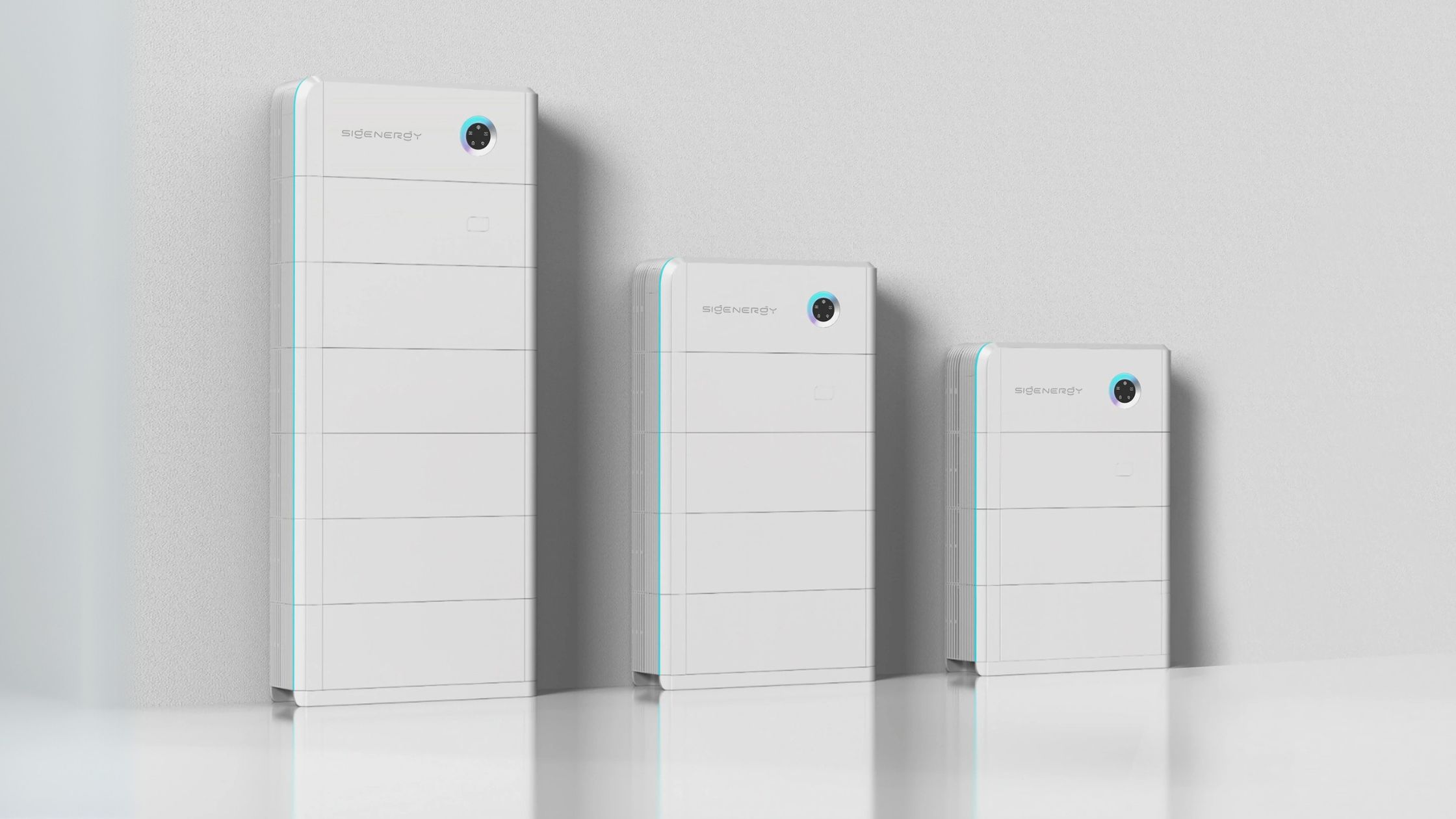
The addition of a home battery to a solar and EV setup can increase the proportion of EV charging powered by solar from around 30–40% (with solar divert only, no battery) to 60–80% or more — depending on the battery size, the solar system’s output, and the household’s total electricity demand.
How the Battery Integrates with EV Charging
In a solar-battery-EV system, the priority hierarchy shifts slightly. During the day, solar powers the home first, then charges the home battery to capacity, then diverts surplus to the EV charger. In the evening, when the EV is plugged in and solar has stopped generating, the battery discharges to power the home and charge the EV — avoiding grid imports at full price. Overnight, if the battery is depleted and the EV still needs more charge, a smart charger draws from the grid at the cheapest available tariff rate.
This layered approach means that an EV plugged in at home in the evening can receive energy from three sources in the most cost-effective order: stored solar from the home battery (effectively free), direct solar surplus if there is any remaining generation (effectively free), and cheap overnight grid electricity as a final top-up. A household running this setup on a good time-of-use tariff can realistically achieve a cost per mile of 1–3p for the vast majority of their driving.
Battery Sizing for a Solar and EV Home
For a household with an EV, the right battery size is typically larger than for a solar-only household. Without an EV, a battery of 5–10kWh usable capacity is usually sufficient to store the solar surplus and cover evening household demand. With an EV, adding 10–15kWh of daily charging demand increases the total electricity storage requirement substantially. A household with a 5kWp solar array, an average-consumption home, and an EV used for typical UK commuting distances is well served by a battery in the 10–15kWh range — allowing the battery to cover both household evening demand and a useful portion of EV charging from solar storage.
Is Battery Storage Essential for Solar EV Charging?
Battery storage is not essential for solar EV charging — solar divert charging without a battery still delivers genuine financial and environmental benefits, particularly for households where the car is parked at home during the day. But for households where the car is typically away during solar generation hours and only available to charge in the evening, battery storage is the most effective way to bridge the gap between when solar generates and when the car is available to charge. Senergy Direct models both scenarios for EV-owning customers and will recommend battery storage only where the financial case supports it.
| Senergy Tip | The charging capacity of your EV charger matters when battery storage is involved. A 7.4kW AC charger can fully charge most medium-sized EVs from flat in around 6–8 hours, but it also drains a 10kWh home battery in under 90 minutes. If you want to power substantial evening EV charging from battery storage, either a large battery, a lower-rate overnight charging strategy, or a combination of battery and overnight grid charging works best. Senergy Direct sizes the battery and EV charger together, considering both requirements simultaneously. |
7. How Much Can You Realistically Save Combining Solar Panels with EV Charging?
The combined financial saving from solar panels and EV charging is one of the most compelling household investment cases in the UK in 2026 — and the figures are grounded in real-world data from UK installations, not optimistic projections.
Start with EV charging costs in isolation. Charging a typical EV entirely at home on a standard tariff at around 25p per kWh, covering 7,400 miles per year at an average efficiency of 3.5 miles per kWh, costs approximately £529 per year. Switching to a dedicated EV overnight tariff such as Octopus Go at around 7.5p per kWh reduces that to approximately £159 per year — a saving of £370 per year from the tariff switch alone, before any solar is involved.
Adding Solar to the Equation
With a solar divert charger and a solar system generating sufficient surplus to provide 40–50% of annual EV charging demand from solar, the effective EV charging cost falls further. If 1,000 kWh of the annual EV charging demand is met by solar surplus (at effectively zero marginal cost once the system has paid for itself), and the remaining 1,200 kWh is covered by the cheap overnight tariff at 7.5p, the annual EV charging cost falls to approximately £90 — a saving of £439 compared to cheap overnight tariff alone, or £440 compared to standard tariff charging.
Add the household electricity bill saving from the solar system (typically £600–£800 per year for a 4–5kWp system in Essex), and the SEG export income on surplus not used by the car or house (perhaps £200–£300 per year), and the total annual benefit of a well-configured solar, battery, and EV setup in Essex is realistically £1,200–£1,800 per year for a typical household.
The Combined Payback Picture
For a combined solar and EV charger installation — a 4.5kWp solar system at approximately £7,500 plus a smart EV charger at £800–£1,200, totalling around £8,300–£8,700 before any tax relief — a combined annual saving of £1,200–£1,500 per year gives a payback period of six to seven years. If battery storage is added (a further £3,000–£6,000 depending on capacity), the payback period extends to eight to ten years for the total system — but with a 25-year system life and increasing electricity prices, the long-term return remains compelling.
The Cost Per Mile Comparison
Perhaps the most vivid way to understand the saving is the cost per mile comparison. Petrol at current UK prices costs approximately 17–20p per mile for an average petrol car. Charging an EV at standard grid rates costs approximately 7p per mile. Charging on a cheap overnight tariff costs around 2–3p per mile. Charging entirely on solar surplus costs effectively 0–1p per mile (the marginal cost of the solar system per unit generated, once paid back). The trajectory from petrol to grid EV to solar EV represents a reduction in fuel costs of up to 95%.
| Senergy Tip | When modelling the financial case for a solar and EV setup, Senergy Direct uses your actual electricity consumption data, your annual mileage, your current tariff, and Essex-specific solar irradiance figures to produce a personalised savings projection. Generic national estimates are a useful starting point, but the most compelling financial case is the one built on your specific numbers — and that is what Senergy Direct provides. |
8. Do You Need to Have Solar Panels Already, or Can You Install Everything Together?
You do not need to have existing solar panels to start thinking about solar EV charging — and in many respects, planning the complete system from scratch gives you the opportunity to design it as an integrated whole rather than retrofitting components around existing equipment. Senergy Direct regularly installs solar panels, home batteries, and EV chargers as a single combined project, and the result is a system that is more efficient, more intelligently configured, and often less expensive overall than three separate installations.
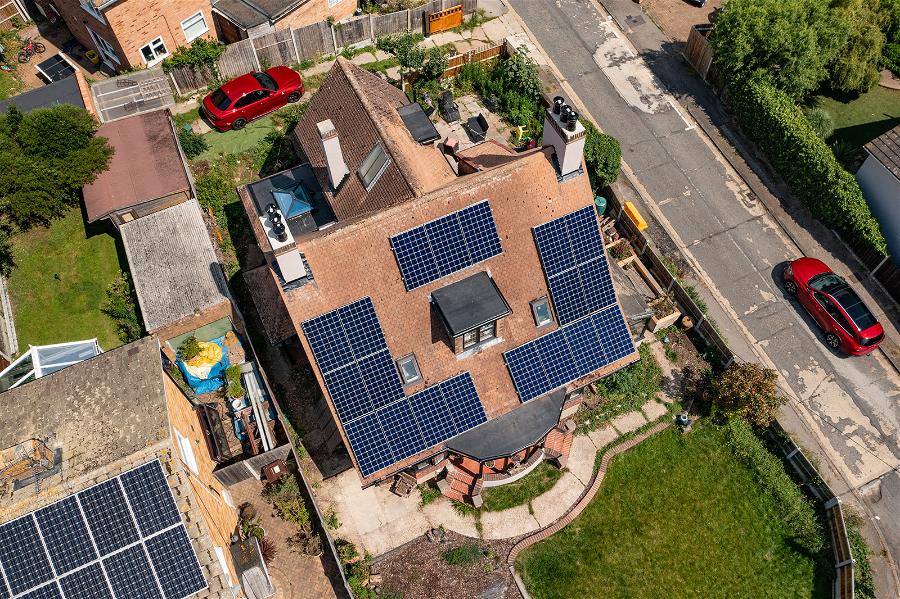
For households that already have solar panels but are now considering an EV or an EV charger, the path forward depends on the existing solar system’s monitoring capability and the inverter’s compatibility with smart EV charger integration. Most solar systems installed in the past five to seven years are compatible with solar divert chargers via a CT clamp sensor, regardless of inverter brand. Older systems may need a monitoring upgrade to enable reliable solar divert functionality.
Installing Everything Together — the Benefits
When solar panels, a home battery, and an EV charger are installed as a single project, the system can be designed with all three components in mind from the outset. The solar system size accounts for EV demand as well as household demand, so it is not undersized from day one. The battery is sized for both household and EV storage needs. The EV charger is specified to be compatible with the inverter and monitoring system, and the energy management system is configured to optimise the flow of electricity between all three components automatically.
The practical and financial benefits of combined installation are also significant: a single scaffolding visit rather than two or three, a single project management process, a single set of MCS certificates and DNO notifications, and a combined package price that is typically more competitive than three separate quotes from three separate installers.
Adding an EV Charger to an Existing Solar System
For households with existing solar who are adding an EV and want to maximise solar charging, the first step is to establish whether the existing solar system can support a solar divert charger. Most modern systems can, with a CT clamp installation taking no more than an hour or two. If the existing solar system is also due for an inverter upgrade or battery addition, it may be worth coordinating all three changes — new inverter, battery, and EV charger — as a single project to minimise disruption and cost.
| Senergy Tip | If you already have solar panels and are considering an EV charger, contact Senergy Direct before purchasing the charger independently. The right charger for a solar household is different from the right charger for a non-solar household — a solar divert-capable smart charger costs only marginally more than a basic unit but delivers substantially better integration with your solar system. Choosing the wrong charger first and then trying to make it work with your solar installation is a common and avoidable mistake. |
9. What Does the Ideal Solar and EV Setup Look Like for an Essex Home?
Essex is an excellent location for a solar and EV charging setup. The county’s above-average solar irradiance — around 970 kWh per kWp per year, approximately 9.7% above the UK national average — means more solar electricity is generated from a given system size than in most other parts of the country. With a large and growing EV-driving population, good broadband connectivity for smart charger management, and a mix of detached, semi-detached, and terraced housing across the county, Essex households are well-positioned to benefit from the solar and EV combination.
The ideal setup for a typical Essex home with an EV varies depending on annual mileage, household electricity consumption, and budget — but the following represents a well-balanced and financially strong configuration for a family home with average energy use and typical commuting patterns.
The Core System: Solar, Battery, and Smart Charger
For a three to four bedroom Essex home consuming around 3,500 kWh per year with an EV adding approximately 2,200 kWh of annual charging demand, a total solar system of 5–6kWp (11–14 panels at 450W) covers both household and EV demand with enough surplus for a useful SEG export income. A home battery of 10–13.5kWh provides storage for evening household use and a useful contribution to evening EV charging. A solar divert smart charger such as the myenergi Zappi or Ohme Home Pro manages daytime solar surplus charging automatically, whilst overnight charging on Octopus Go or Intelligent Octopus Go at around 7–8.5p per kWh covers any remaining EV demand.
The Tariff Layer
The tariff choice is as important as the hardware. For an Essex home with solar and an EV, the ideal tariff in 2026 is typically Intelligent Octopus Go — which provides cheap overnight EV charging, integrates with compatible smart chargers to optimise the charging schedule, and sits alongside the solar system’s SEG export arrangement. On this combination, the household is effectively capturing three separate savings streams: solar surplus used directly (saving 24–27p per unit), cheap overnight EV charging (saving 16–18p per unit vs standard rate), and SEG export income on surplus not used by the home or car.
Essex-Specific Considerations
Several factors specific to Essex influence the optimal system design. The county’s solar irradiance advantage means a slightly smaller system achieves the same annual generation as a larger system would need in less sunny regions — improving the cost per unit of generated electricity. Many Essex properties have garages or driveways that make EV charger installation straightforward. And the county’s proximity to London means a significant proportion of Essex commuters drive substantial annual mileage, increasing the financial benefit of solar EV charging relative to the national average.
| Senergy Tip | For Essex households, the combination of above-average solar irradiance and typical commuter driving patterns creates a particularly strong case for the solar-battery-EV charger combination. Senergy Direct designs integrated systems specifically for Essex homes, using local irradiance data and the customer’s actual mileage and consumption data to size each component correctly. The result is a system that works harder and pays back faster than a generic nationally-designed equivalent. |
10. How Senergy Direct Helps Essex Homeowners Build the Complete Solar, Battery, and EV Package
Senergy Direct is an MCS-certified solar and battery installer based in Basildon, with over ten years of experience installing solar panels, battery storage, and EV chargers for Essex homeowners. The integrated solar-battery-EV package is one of their most requested project types, and their team has developed a well-refined process for designing, supplying, and installing these systems as a seamless whole.

The process begins with a consultation that covers all three elements simultaneously. Senergy Direct reviews the household’s electricity consumption, the proposed EV and its annual mileage, the available roof space and solar potential, any existing solar or battery equipment, the current energy tariff, and the budget and priorities of the household. From this consultation, they produce a system design that specifies the solar array size, the battery capacity (if included), and the EV charger model — all optimised to work together and sized for the household’s complete energy profile.
The Integrated Installation
Senergy Direct coordinates the installation of all three components — solar panels, home battery, and EV charger — as a single project with a single installation team, single scaffolding visit, and single project timeline. All MCS certification, DNO notifications, and electrical certification are handled as part of the same project. The commissioning process includes configuration of the solar monitoring system, battery management settings, EV charger solar divert mode, and — where the household is switching to a smart tariff — guidance on the tariff setup and how the system will optimise around it.
Post-Installation Support and Monitoring
Once installed, Senergy Direct provides access to a monitoring platform that shows solar generation, battery state of charge, home consumption, EV charging, and grid import/export in real time. This transparency allows homeowners to see exactly how their system is performing — how much of their EV charging is coming from solar, how much from the battery, and how much from the grid — and to track the financial benefit accumulating over time. Senergy Direct remains available for ongoing support, tariff advice, and any system adjustments as energy prices, tariffs, and the household’s circumstances evolve.
A Genuinely Local Service
As an Essex-based business, Senergy Direct brings local knowledge and local availability that national installers cannot replicate. Their team knows the DNO landscape in Essex, understands the planning requirements across the county’s different districts, and is available for site visits, consultations, and post-installation support without the lead times and travel costs that affect companies based further afield. For Essex homeowners building the complete solar, battery, and EV charging setup, Senergy Direct is the local specialist the project deserves.
| Senergy Tip | The best time to think about the complete solar, battery, and EV setup is before you buy the EV — not after. The EV purchase decision can influence the solar system size, the battery capacity, and the charger specification, and having those conversations early means the system is designed correctly from the outset. Senergy Direct welcomes pre-EV-purchase consultations and can help you understand exactly what hardware and tariff setup will deliver the best results for your driving habits and home. |
Build Your Solar and EV Charging Setup with Senergy Direct
Senergy Direct designs and installs integrated solar, battery, and EV charger systems for Essex homeowners — sized for your home, your car, and your driving habits, and configured to work intelligently from day one. As an Essex-based MCS-certified installer with over ten years of local experience, their team gives you the honest, practical advice you need to make the most of the solar and EV combination.
Get in touch with Senergy Direct today for a no-obligation consultation. Whether you are starting from scratch or adding to an existing system, their team will design the setup that works best for your home — and show you exactly how much you could save driving on Essex sunshine.
Frequently Asked Questions
Quick-Fire FAQs
Here are the questions Senergy Direct hears most often from Essex homeowners thinking about combining solar panels with EV charging — with clear, practical answers.
Can I Charge My Electric Car Directly from Solar Panels Without a Special Charger?
Not safely or efficiently. Solar panels produce variable DC electricity that must be converted to AC by an inverter before it can power your EV charger, and the charger itself must be capable of adjusting its charging rate to match available solar surplus. A standard EV charger will simply draw from the grid regardless of solar output. A solar divert charger — such as the myenergi Zappi or Ohme Home Pro — is the essential component that connects your solar generation to your EV charging intelligently.
How Long Does It Take to Charge an EV from Solar Panels?
Solar divert charging rate depends on the surplus solar electricity available at any given moment. On a bright summer day with a 4kWp system and low household demand, a surplus of 2–3kW might be available for the charger, giving approximately 6–10 miles of charge per hour. At peak surplus (perhaps 3.5kW on a very sunny day), a compatible charger can add around 12–14 miles per hour. A full day of solar divert charging in good conditions can add 50–100 miles of range — enough for most daily commuting needs without any grid electricity.
Can I Charge My EV from Solar Panels Overnight?
Not directly from solar — panels generate no electricity at night. However, if you have home battery storage, solar electricity generated during the day can be stored in the battery and used to charge the EV overnight. Without a battery, overnight EV charging must come from the grid. On a cheap overnight tariff such as Octopus Go (around 7–8.5p per kWh), this is still significantly cheaper than standard daytime grid rates, and many households run solar divert charging during the day alongside overnight tariff charging to get the best of both approaches.
What Is the Cheapest Way to Charge an Electric Car at Home in 2026?
The cheapest approach in 2026 for a homeowner with solar panels is a combination of solar divert charging during the day (effectively free electricity) and cheap overnight charging on a time-of-use tariff such as Octopus Go or Intelligent Octopus Go for any remaining demand. This combination can reduce the effective cost of EV charging to 1–3p per mile, compared to 7p per mile on a standard tariff or 17–20p per mile for petrol. Adding home battery storage to store midday solar surplus for evening EV charging takes self-sufficiency further still.
Do Solar Panels Generate Enough Electricity in Winter to Charge an EV?
Solar generation in winter is significantly lower than in summer — a 4kWp system that might generate 16–20kWh on a clear summer day may generate only 2–4kWh on a winter day. This means solar divert EV charging is limited in winter, and grid charging — ideally on a cheap overnight tariff — needs to do more of the work. Annual solar generation still covers a meaningful proportion of EV demand when averaged across the full year, but the contribution is front-loaded towards spring, summer, and autumn rather than evenly distributed across all twelve months.
Which Solar Divert Chargers Are Compatible with Most EVs?
All major solar divert chargers use the Type 2 AC charging socket that is standard for all EVs sold in the UK, so compatibility with the vehicle is universal. The leading solar divert chargers in the UK market in 2026 include the myenergi Zappi (the most widely installed), the Ohme Home Pro, the Indra Smart PRO, and the Hypervolt Home 3 Pro. Compatibility with your specific solar inverter and monitoring system is the more relevant compatibility question, and Senergy Direct will confirm this before specifying a charger for your installation.
Do I Need Planning Permission for a Home EV Charger in Essex?
In most cases, a wall-mounted home EV charger on a domestic property in Essex is permitted development and does not require planning permission. Exceptions include listed buildings, certain conservation area properties with Article 4 Directions, and chargers installed on land that is not associated with the domestic dwelling. Freestanding or ground-mounted EV chargers may have different requirements. Senergy Direct confirms planning requirements for EV chargers as part of their installation assessment.
Can I Use One System to Power My Home, Charge My EV, and Store Energy in a Battery?
Yes — a well-designed integrated system does exactly this. A solar array feeds electricity into a hybrid inverter that manages the flow between the home’s electrical system, the home battery, the EV charger, and the grid. Modern energy management systems automate the priority of electricity use across all four destinations — home first, battery second, EV third, grid export fourth — without any manual intervention. Senergy Direct designs and installs these integrated systems as a single combined project.
What Happens to My Solar Export Payments If I Use More Electricity to Charge My EV?
If you use more solar electricity to charge your EV (via solar divert), less surplus is exported to the grid and your Smart Export Guarantee payments fall accordingly. However, the value of each unit used for EV charging (saving 24–27p per kWh on grid electricity) is typically greater than the SEG export rate (5–15p per kWh), so using surplus solar for EV charging is usually more financially beneficial than exporting it. The exception is when premium export tariffs pay rates close to or above the avoided import cost, in which case a hybrid strategy optimises both.
Is It Worth Getting an EV and Solar Panels at the Same Time?
For most Essex homeowners, yes — especially if both are planned purchases within a similar timeframe. Installing solar and an EV charger together saves on installation costs (one scaffolding visit, one project) and allows the solar system to be correctly sized for both household and EV demand from the outset. The combined annual saving from solar electricity, solar EV charging, and cheap overnight EV tariff charging can reach £1,200–£1,800 per year for a typical Essex household, making the combined investment one of the strongest financial decisions available to homeowners in 2026.
Disclaimer: This article is intended for general informational purposes only. All savings figures, cost per mile estimates, system costs, tariff rates, and financial projections are based on data available at the time of writing and will vary depending on individual circumstances, energy tariffs, driving habits, vehicle efficiency, system specification, and location. Always obtain a site-specific assessment and verify current tariff rates before making any investment decision. Senergy Direct accepts no liability for actions taken or not taken based on the contents of this article.

