


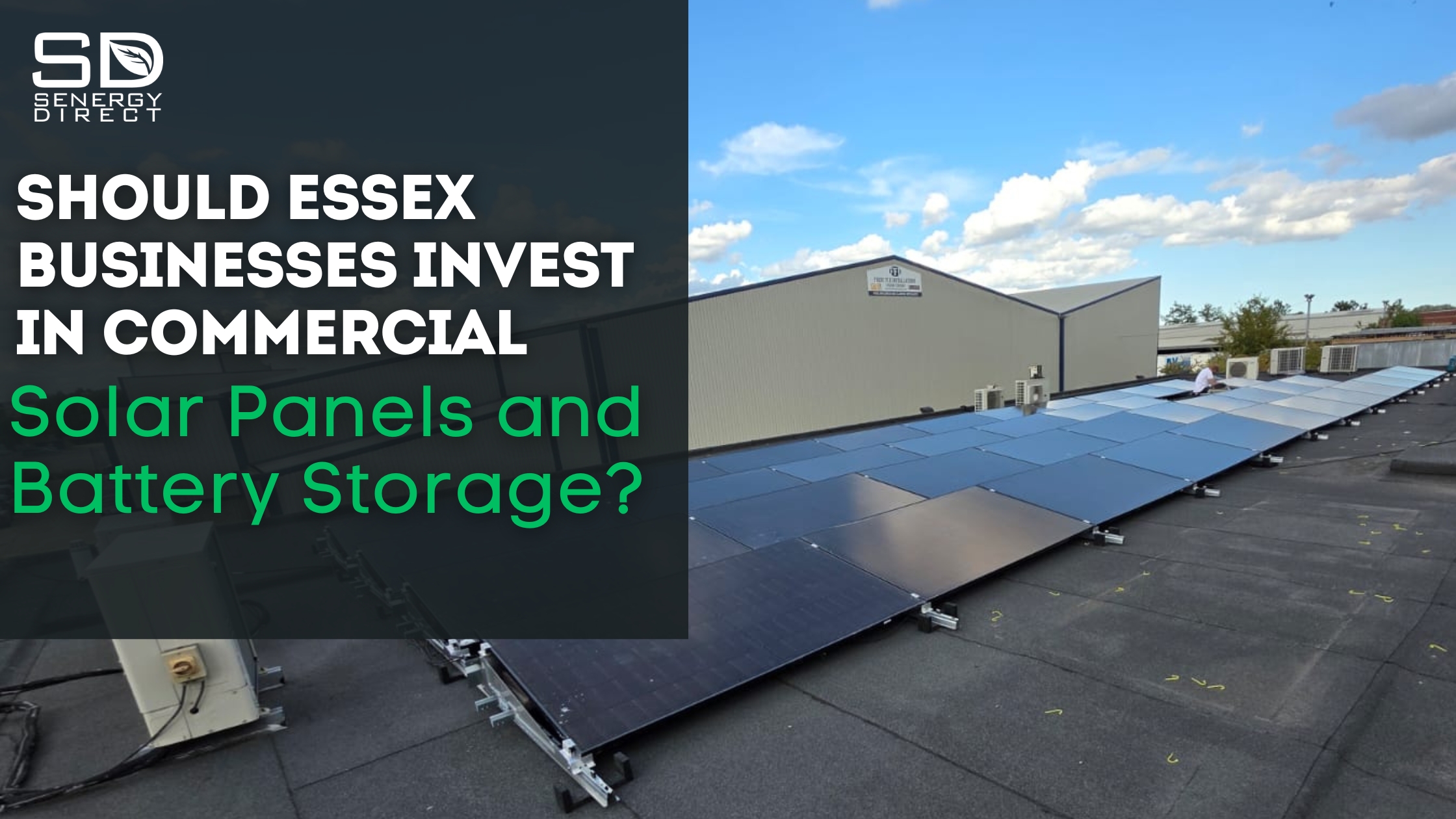
Senergy Direct — based in Basildon and installing across Essex — makes the commercial and financial case for solar investment in 2026.
Energy costs are one of the most significant financial pressures facing Essex businesses right now. Electricity prices that averaged around 14p per kWh a decade ago now routinely sit at 22–27p – and the market conditions driving those prices show no sign of delivering sustained relief. For businesses running commercial premises across Essex, the question is no longer whether energy costs are a strategic issue. It is what to do about them.
Commercial solar panels and battery storage offer one of the most compelling answers available in 2026. With payback periods of four to six years (often three years after tax relief), annual returns on investment of 14–20% or more, a business rates exemption that runs to 2035, and a tax system that allows the full cost of a solar installation to be deducted from taxable profits in year one, the financial case for commercial solar in Essex has rarely been stronger.
In this guide, Senergy Direct — an MCS-certified solar and battery installer based in Basildon, serving Essex businesses for over ten years — sets out the complete case for commercial solar investment in 2026. From the Essex-specific solar advantage and the financial modelling, through to the installation process and financing options, this is everything an Essex business owner needs to know before making the decision.
In This Guide We Answer:
- Why Essex Businesses Are Increasingly Turning to Commercial Solar in 2026
- What Makes Essex Particularly Well-Suited to Commercial Solar Investment?
- How Full Expensing and Capital Allowances Reduce the Real Cost for Essex Businesses
- The Business Rates Exemption: Why Commercial Solar Won’t Increase Your Property’s Rateable Value
- What Battery Storage Adds to a Commercial Solar Installation — and When It’s Worth It
- Which Types of Essex Businesses Benefit Most from Commercial Solar?
- How Does the Payback Period and ROI Compare to Other Business Investments?
- What Does the Installation Process Look Like for a Commercial Property in Essex?
- How Senergy Direct Helps Essex Businesses Make the Move to Commercial Solar
1. Why Essex Businesses Are Increasingly Turning to Commercial Solar in 2026
Energy costs have become one of the most pressing financial pressures facing Essex businesses in 2026. UK commercial electricity prices have risen from around 14.4p per kWh in 2014 to 22–27p per kWh today — an increase of more than 50% over a decade — and the geopolitical instability driving wholesale energy markets shows no sign of delivering sustained relief. For businesses running significant premises — factories, warehouses, offices, farms, retail units — electricity is no longer a minor operational cost. It is a material line on the P&L that demands a strategic response.
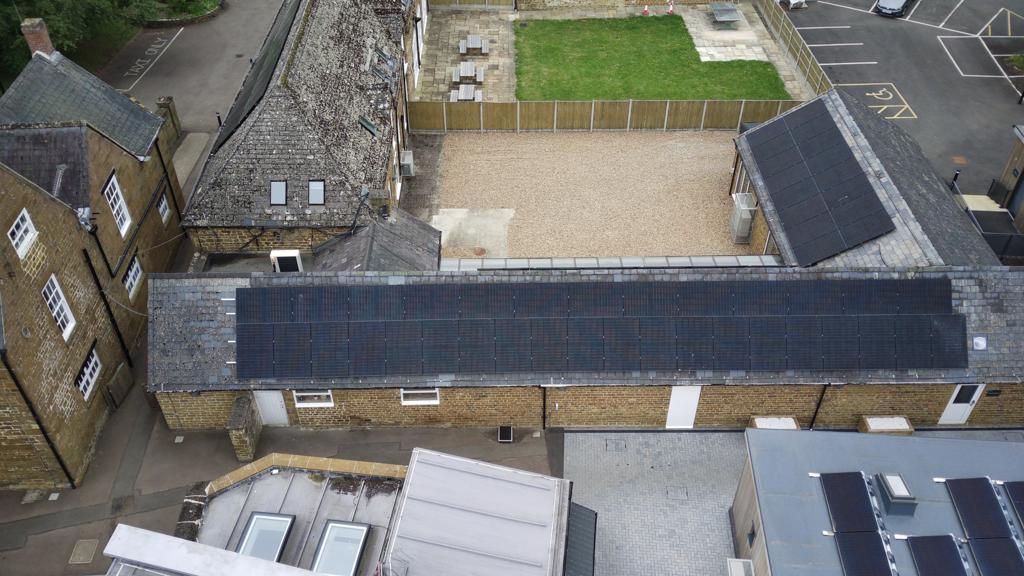
Commercial solar panels and battery storage provide exactly that. By generating electricity on-site from a capital asset with a 25-year lifespan and a levelised cost of production of just 5–8p per kWh, Essex businesses can lock in a substantial portion of their electricity supply at a cost that is a fraction of the current grid rate — and insulate themselves from future price volatility for the remainder of the system’s life.
Senergy Direct has been installing solar panels and battery storage systems for residential and commercial customers across Essex from its Basildon base for over ten years. The commercial enquiries their team receives have increased sharply in the past two years, driven by a combination of higher energy bills, improved battery technology, and a tax environment that actively rewards investment in renewable energy. This guide sets out the complete commercial case for Essex businesses considering the move to solar in 2026.
| Senergy Tip | The first step for any Essex business considering commercial solar is to establish your current annual electricity consumption and spend. Pull together twelve months of electricity bills and note both the kWh consumed and the total cost. This baseline figure is the foundation of every financial case for solar investment — and it is the number that determines how large a system you need and how quickly it will pay for itself. |
2. What Makes Essex Particularly Well-Suited to Commercial Solar Investment?
Essex enjoys one of the most favourable solar resources in the United Kingdom. The county sits within the East of England region, which consistently ranks among the highest in the country for solar irradiance — the total amount of solar energy available per square metre of roof surface per year. At approximately 970 kWh per kWp of installed capacity per year, Essex solar installations generate around 9.7% more electricity than the UK national average. For a commercial installation, that additional generation compounds meaningfully over a 25-year system life.
With around 1,600 sunshine hours per year and relatively low annual rainfall, Essex benefits from more clear-sky and high-irradiance days than most of the country. This solar advantage, combined with the county’s predominantly flat topography and its large stock of commercial and industrial buildings with substantial south-facing or flat roof areas, makes Essex one of the most commercially attractive locations for solar investment in the UK.
The Essex Business Landscape
Essex has a diverse and dynamic business economy. The county is home to a significant logistics and distribution sector, particularly along the M25 and A12 corridors and around the port clusters at Tilbury and Thurrock. Manufacturing, agriculture, food production, construction, retail, professional services, and a growing technology sector all feature prominently. Each of these business types has characteristics — daytime energy use, large roof areas, high electricity consumption — that align well with the commercial solar proposition.
The county’s proximity to London also creates a strong commercial services economy in towns like Chelmsford, Colchester, Brentwood, and Basildon, where office-based and professional service businesses are increasingly adopting solar as part of their ESG and net zero commitments alongside the financial case.
Local Support and Funding
Essex has been an active participant in national renewable energy funding schemes. The Warm Homes: Local Grant awarded £6 million to a consortium of Essex local authorities in 2025, covering Braintree, Brentwood, Castle Point, Chelmsford, Colchester, Epping Forest, Harlow, Maldon, Rochford, Tendring, Uttlesford, Southend-on-Sea, and Thurrock. Whilst this scheme targets residential properties, it reflects the county’s commitment to renewable energy infrastructure — and similar local support frameworks for commercial properties continue to be explored by Essex councils.
| Senergy Tip | Essex’s above-average solar irradiance means that the financial projections for a commercial solar installation here are more favourable than the UK national average figures you may have seen quoted online. When Senergy Direct produces a financial proposal for an Essex business, they use site-specific and region-specific irradiance data — not national averages — ensuring the generation and savings estimates are realistic for your specific location. |
3. How Full Expensing and Capital Allowances Reduce the Real Cost for Essex Businesses
One of the most significant and underappreciated advantages of commercial solar investment for Essex businesses is the tax relief available through the UK capital allowance regime. The combination of Full Expensing and the Annual Investment Allowance means that the after-tax cost of a commercial solar installation is substantially lower than the headline price — reducing the effective cost by 19–25% for most UK businesses in a single year.
Full Expensing, introduced in April 2023 and made permanent in the 2023 Autumn Statement, allows companies paying Corporation Tax to deduct 100% of the cost of qualifying plant and machinery — including solar panels, inverters, battery storage systems, and associated installation costs — from their taxable profits in the year of purchase. For a company paying Corporation Tax at 25%, a £65,000 solar installation generates a tax saving of up to £16,250 in the year of installation, reducing the effective net cost to around £48,750.
Annual Investment Allowance for Sole Traders and Partnerships
Full Expensing is available to companies paying Corporation Tax. Sole traders and partnerships cannot claim Full Expensing, but they can claim the Annual Investment Allowance (AIA), which provides 100% first-year tax relief on qualifying plant and machinery up to a current limit of £1 million per year. The practical effect is the same — the full cost of the solar installation can be deducted from taxable profits in the year of purchase, reducing the tax bill by the equivalent of the applicable Income Tax rate on that amount.
The 50% First-Year Allowance
For businesses that have already used their full AIA limit on other qualifying expenditure in the same year, a 50% First-Year Allowance is available on assets qualifying as special rate expenditure — which can include certain solar and energy storage equipment. This allows 50% of the cost to be deducted in year one, with the remaining 50% written down at 6% per year thereafter. Even where the full AIA or Full Expensing cannot be claimed, a meaningful upfront tax saving is available.
Timing Considerations
Capital allowances are generally claimed in the accounting period in which the expenditure is incurred — the date the equipment is purchased or the hire purchase agreement is signed, not the installation date. For businesses with a financial year-end approaching and a high-profit year, investing in solar before the year-end can meaningfully reduce that year’s Corporation Tax bill. Senergy Direct recommends discussing the timing of a commercial solar investment with your accountant before proceeding, to ensure the relief is claimed in the most advantageous accounting period
| Senergy Tip | Before committing to a commercial solar installation, ask your accountant to model the after-tax cost using Full Expensing or AIA. The tax saving in year one can significantly change the payback calculation — in the worked example above, Full Expensing reduced the effective net cost from £65,000 to £48,750, shortening the payback period by over a year. This is a genuine financial benefit that should be front and centre in any commercial solar investment decision. |
4. The Business Rates Exemption: Why Commercial Solar Won’t Increase Your Property’s Rateable Value
Business rates are a significant overhead for many Essex commercial properties, and the prospect of a solar installation increasing a property’s rateable value — and therefore its business rates liability — is a concern that sometimes deters businesses from proceeding. This concern is understandable but, for the vast majority of commercial solar installations in 2026, unfounded.
A landmark business rates exemption, running from April 2023 to 2035, provides 100% relief on any increase in rateable value attributable to a new rooftop solar installation. This means that installing solar panels on your commercial property will not increase your business rates bill — at all — for the entire period the exemption applies. Businesses installing in 2025 or 2026 will benefit from a full decade of this relief before it comes up for renewal, representing a genuinely valuable additional benefit of investing now rather than later.
How the Exemption Works
Under normal circumstances, any improvement to a commercial property that increases its value — and therefore its ability to command a higher rent — would be reflected in an increased rateable value at the next Valuation Office Agency assessment, leading to higher business rates. The solar business rates exemption specifically carves out rooftop solar installations from this process, ensuring that the Valuation Office Agency does not factor solar panels into the rateable value assessment during the exemption period.
This exemption applies to rooftop solar installations — panels mounted on the roof of an existing commercial building. Ground-mounted solar installations and standalone solar farms are treated differently and may be subject to business rates as a separate hereditament. For most Essex businesses installing panels on their existing roof, however, the exemption applies straightforwardly.
The Financial Value of the Exemption
The financial value of the business rates exemption depends on the size of the installation and the rateable value of the property. For a large commercial installation that would otherwise have added meaningfully to the rateable value, the exemption can be worth thousands of pounds per year in avoided rates liability. Even for smaller installations where the rateable value impact would have been modest, the certainty of no business rates increase removes a financial risk that would otherwise need to be factored into the investment case.
| Senergy Tip | Notify your local billing authority (your district or borough council) when you install a commercial solar system, even though the business rates exemption applies. This ensures your rates account is correctly noted and prevents any inadvertent future reassessment. Senergy Direct advises all commercial customers on post-installation notifications as a standard part of the handover process. |
5. What Battery Storage Adds to a Commercial Solar Installation — and When It’s Worth It
Battery storage for commercial solar installations has become significantly more accessible and cost-effective in recent years. Combined solar and battery installations have payback periods that are often under seven years for well-matched systems – and the combination delivers benefits that solar alone cannot.
For a commercial property, battery storage serves several distinct functions, and understanding which of these applies to your business is key to assessing whether the additional investment is worthwhile.
Increasing Solar Self-Consumption
The most direct benefit of battery storage alongside commercial solar is increased self-consumption. Without a battery, surplus solar electricity generated when the business is closed — evenings, weekends, bank holidays — is exported to the grid at Smart Export Guarantee rates of 4–15p per kWh. With a battery, that surplus is stored and discharged during business hours the following day, displacing grid electricity at 22–27p per kWh. The value per unit is two to four times higher than the export rate, making self-consumption through battery storage significantly more financially attractive than grid export.
Peak Demand Shaving and Demand Charges
Larger commercial electricity consumers are often on half-hourly metered supply contracts with demand charges — additional charges based on the peak demand recorded in any half-hour period. These peak demand charges can be substantial, and a battery that discharges during peak consumption periods reduces the recorded peak, lowering the demand charge element of the electricity bill. For businesses on half-hourly metered contracts with significant demand charges, this benefit alone can justify a meaningful portion of the battery investment cost.
Overnight Cheap-Rate Charging
A commercial battery can also be charged from the grid overnight during cheap-rate periods — particularly valuable on time-of-use tariffs where overnight rates can be significantly lower than daytime rates. The stored energy is then discharged during the business day, reducing grid imports at higher daytime rates. For businesses that consume most of their electricity during the day, this overnight arbitrage strategy provides value year-round, independent of solar generation — particularly in winter when solar output is limited.
Energy Resilience and Backup Power
For businesses where a power cut causes significant operational disruption or financial loss — food producers, cold storage facilities, data centre operations, manufacturers with continuous processes, or customer-facing retail businesses — battery storage with islanding capability provides a genuine resilience benefit. A well-specified commercial battery can keep critical equipment operational during a grid outage, avoiding the costs and reputational damage of an unplanned shutdown.
| Senergy Tip | The decision of whether to include battery storage in a commercial solar installation depends heavily on your business’s electricity consumption pattern, tariff structure, and appetite for energy resilience. Senergy Direct conducts a detailed energy usage analysis before making a battery storage recommendation — modelling the financial return of different battery sizes against your specific consumption data, rather than applying a one-size-fits-all approach. |
6. Which Types of Essex Businesses Benefit Most from Commercial Solar?
Whilst the financial case for commercial solar is compelling for a broad range of business types, the return on investment is most pronounced for businesses with specific characteristics: high daytime electricity consumption, large roof areas, energy-intensive processes, and operations that align with solar generation hours. Essex’s diverse business economy encompasses many of these high-value profiles.
Logistics, Distribution, and Warehousing
Essex has a significant logistics and warehousing sector, particularly along the M25, A12, and A13 corridors and around Tilbury, Thurrock, and the London Gateway port. Logistics and distribution facilities typically have large, flat or low-pitched roofs with excellent solar potential, significant electricity consumption from lighting, refrigeration, EV charger infrastructure, and materials handling equipment, and daytime operations that align well with solar generation hours. A well-sized solar installation on a 50,000 sq ft warehouse roof can generate substantial annual electricity savings and a return on investment that significantly outperforms most alternative capital expenditure decisions.
Manufacturing and Industrial
Manufacturing businesses across Essex — from food processing and packaging in the north of the county to engineering and automotive supply chain businesses in the south — typically have high and consistent daytime electricity consumption, making them well-suited to maximising solar self-consumption. Many also have large roof areas capable of supporting substantial solar installations. The combination of high consumption, available roof space, and daytime operation creates excellent conditions for commercial solar investment, often delivering payback periods of four to six years.
Agriculture and Equestrian
Essex’s agricultural sector — which spans arable, livestock, and horticultural operations across the county — benefits from commercial solar in ways that extend beyond simple bill savings. Agricultural buildings typically have large, clear roof areas ideal for solar panels. Farm businesses can use solar to reduce electricity costs for irrigation, cold storage, crop drying, and livestock ventilation. The UK’s agricultural capital grant schemes have historically supported renewable energy investment in farm businesses, and Senergy Direct has considerable experience designing and installing agricultural solar systems across Essex.
Retail, Hospitality, and Leisure
Retail premises, hotels, restaurants, pubs, and leisure facilities across Essex all have electricity consumption profiles that benefit from solar — particularly businesses with refrigeration, air conditioning, or kitchen equipment running throughout the day. For customer-facing businesses in Essex’s town centres and retail parks, solar installation also delivers a visible sustainability credential that resonates with a growing proportion of consumers who actively choose businesses that demonstrate environmental responsibility.
Professional Services and Offices
Office-based businesses in Chelmsford, Colchester, Harlow, and across Essex are increasingly adopting commercial solar as part of their ESG strategies and net zero commitments. Whilst office buildings typically have smaller roof areas relative to their floor area than industrial or agricultural properties, rooftop solar can still meaningfully offset a significant proportion of electricity consumption for lighting, IT, air conditioning, and facilities equipment — whilst publicly demonstrating a commitment to sustainability that supports recruitment, client relationships, and corporate reputation.
| Senergy Tip | The best indicator of whether your Essex business will benefit strongly from commercial solar is the ratio of your daytime electricity consumption to your total annual consumption. If 60% or more of your electricity is used during daylight hours on weekdays, solar self-consumption rates will be high and the financial case will be strong. Senergy Direct can help you establish this ratio from your smart meter data or half-hourly consumption records. |
7. How Does the Payback Period and ROI Compare to Other Business Investments?
Commercial solar’s financial profile is unusual among business capital investments: it combines a relatively short payback period with an exceptionally long productive life and a high degree of return certainty. Understanding how this profile compares to other business investment options helps frame the decision appropriately.
In 2026, commercial solar installations in the UK are delivering ROI of 14–20% per year for smaller to medium-sized systems, rising to 20–33% for larger installations above 250kWp that benefit from greater economies of scale. Payback periods of four to six years are typical for well-matched commercial installations, with many Essex businesses achieving payback in three years after the Corporation Tax saving from Full Expensing is applied in year one.
Certainty and Predictability
One of the most valuable aspects of commercial solar as an investment is the predictability of the return. The sun rises every day. Panel degradation is slow and well-understood — typically 0.4–0.5% per year, meaning a system producing 97,000 kWh in year one is still producing around 85,000 kWh in year 25. Electricity prices, whilst variable, have a clear long-term upward trend driven by demand growth and grid decarbonisation costs — meaning the value of each unit generated is likely to be higher, not lower, in future years than it is today. This combination of predictable generation and likely increasing value per unit creates a very stable investment case.
Comparison with Alternative Capital Uses
For an Essex SME generating a 14–20% annual return on a commercial solar installation with a 25-year productive life, the comparison against holding cash on deposit, investing in equipment with a five-year useful life, or increasing marketing spend is favourable by almost any measure. The investment is also inherently inflation-protective — the value of the electricity generated rises broadly in line with energy price inflation, preserving real returns in a way that fixed-return investments cannot.
The Lifetime Savings Multiplier
Over 25 years, net lifetime savings from a commercial solar installation frequently exceed four to six times the original capital cost, even after accounting for panel degradation, maintenance costs, and the occasional inverter replacement. For the Chelmsford manufacturing example discussed earlier — a £65,000 installation generating £15,763 per year in direct bill savings — the 25-year gross saving (assuming modest 2% annual electricity price inflation) exceeds £500,000. Against a net first-year cost of £48,750 after Full Expensing, that is a capital multiplier that few business investment decisions can match.
| Senergy Tip | When assessing the ROI of commercial solar for your Essex business, ask Senergy Direct to model the return under both a static electricity price assumption and an escalating price assumption (2–3% per year). The escalating scenario — which is closer to the historical and likely future trend — typically shows a significantly stronger return and a shorter effective payback period, and it is the more realistic basis for the investment decision. |
8. What Does the Installation Process Look Like for a Commercial Property in Essex?
Commercial solar installations are more complex than domestic ones, and understanding what the process involves — from initial enquiry through to a commissioned, generating system — helps Essex businesses plan effectively and avoid the disruption that a poorly managed project can cause.
The process begins with an initial consultation and energy assessment. Senergy Direct reviews the business’s electricity bills and consumption data, assesses the commercial property — its roof type, area, structural condition, orientation, and any shading — and produces a preliminary system sizing recommendation. For larger or more complex properties, this stage may involve a desktop survey using aerial imagery before a site visit is arranged.
System Design and DNO Application
Once the system scope is agreed, Senergy Direct produces a detailed system design — specifying panel type and layout, inverter configuration, mounting system, cabling routes, and battery storage if included. For commercial installations above 3.68kW on a single-phase connection (which includes virtually all commercial systems), a notification or application to the Distribution Network Operator is required. In Essex, the relevant DNO is UK Power Networks. For systems requiring formal approval — typically those above 50kW or in areas of grid constraint — this process can take several weeks and occasionally requires technical modifications. Senergy Direct manages all DNO interactions on behalf of their commercial customers.
Installation and Commissioning
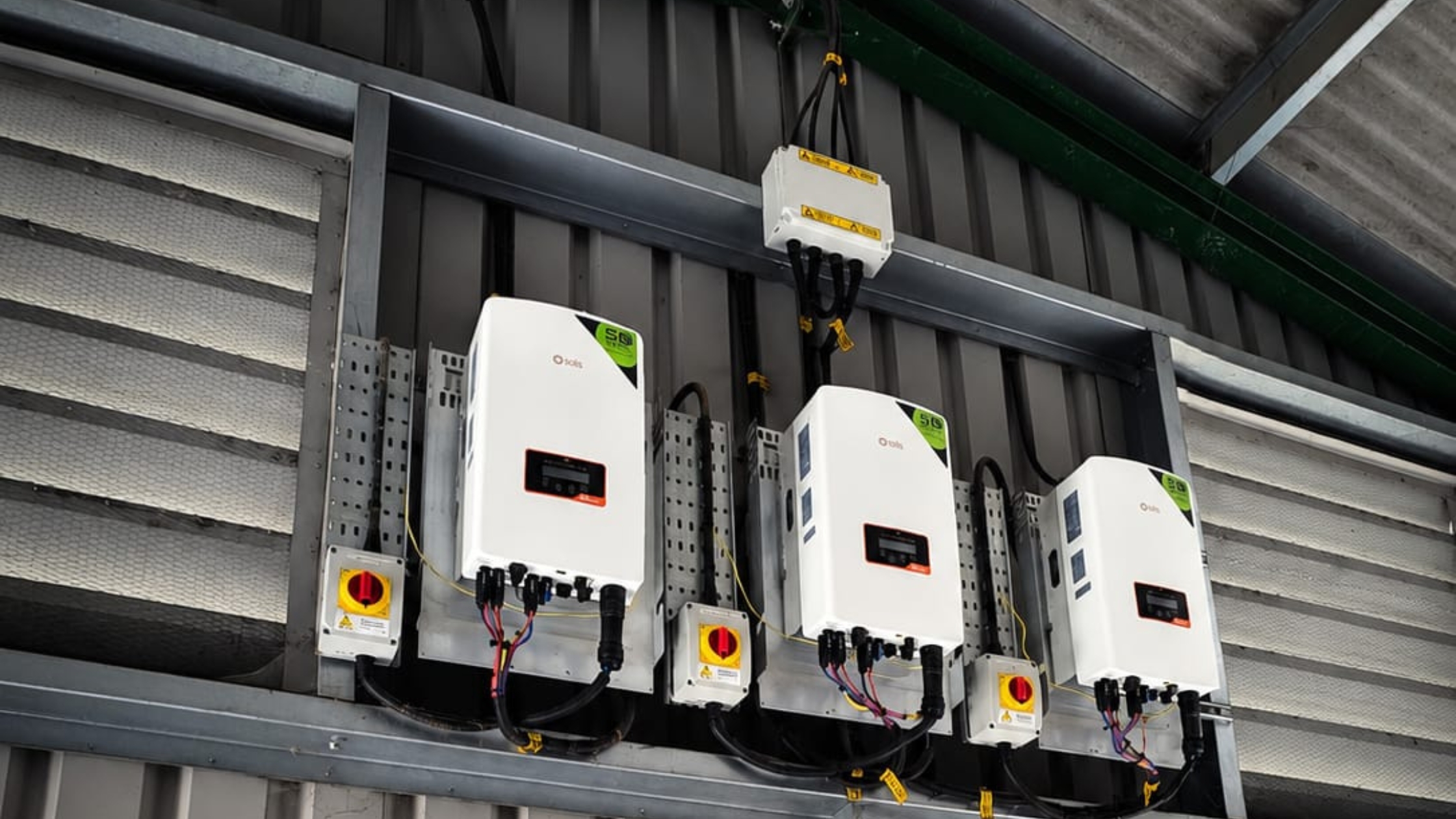
Commercial installations vary in duration from one to two days for smaller systems (under 30kWp) to one to two weeks for larger installations above 100kWp. The work involves roof access and scaffolding or MEWP (mobile elevated work platform) equipment, panel and mounting installation, inverter and electrical cabinet installation, grid connection and metering, and system commissioning and testing. Senergy Direct coordinates all trades — electrical, structural, and roofing — and manages health and safety compliance throughout the project.
Handover and Monitoring
On completion, Senergy Direct commissions the monitoring system and provides the business with access to a real-time generation dashboard showing daily, monthly, and annual output. They issue all compliance documentation including the MCS certificate, electrical installation certificate, and DNO notification confirmation. They also advise on SEG export tariff registration and can connect the system to any building energy management system already in use at the property. Post-installation support is provided throughout the system’s life.
| Senergy Tip | For commercial installations, allow a minimum of four to eight weeks from initial enquiry to installation start — longer for larger systems requiring DNO approval. The DNO process is often the longest lead-time item and cannot be rushed. Senergy Direct submits DNO applications as early as possible in the project timeline to minimise overall project duration and will keep you informed of progress at every stage. |
9. How Senergy Direct Helps Essex Businesses Make the Move to Commercial Solar
Senergy Direct is an MCS-certified solar and battery storage installer based in Basildon, with over ten years of experience serving residential and commercial customers across Essex and the surrounding counties. Their commercial team has designed and installed solar systems for a wide range of Essex businesses — from small professional services firms and farm businesses to larger manufacturing, logistics, and retail operations.
What distinguishes Senergy Direct’s approach to commercial solar is the depth of the pre-installation analysis they undertake before recommending a system. Every commercial proposal is built on a thorough review of the business’s actual electricity consumption data — not industry averages — combined with a detailed assessment of the property’s solar potential, roof condition, DNO capacity, and any planning considerations. The financial model in every proposal reflects the specific tax position of the business, the current capital allowance regime, and Essex’s above-average solar irradiance — giving business owners a realistic and credible basis for the investment decision.
What a Senergy Direct Commercial Proposal Includes
Every commercial solar proposal from Senergy Direct includes a full system specification with component makes, models, and warranties; a predicted annual generation figure in kWh based on site-specific irradiance data; a financial model showing annual bill savings, SEG income, capital allowance tax saving, and payback period; a business rates exemption confirmation; battery storage modelling where relevant; and a clear project timeline including DNO application lead times. The proposal is designed to give business owners and their finance directors everything they need to make a confident investment decision.
Financing Options
Senergy Direct works with business finance partners to offer commercial customers a range of funding options beyond outright capital purchase. These include asset finance and hire purchase arrangements that allow the capital allowance to be claimed from day one whilst spreading the upfront investment over monthly payments, and Power Purchase Agreements (PPAs) that require no upfront capital — instead, the business agrees to purchase the electricity generated by the panels at a fixed rate below the grid price, with the installer retaining ownership of the equipment. Each funding model has different financial implications, and Senergy Direct presents the options clearly so businesses can choose the approach that best suits their balance sheet and cash flow.
Local Knowledge, Long-Term Relationship
As an Essex-based business themselves, Senergy Direct brings local knowledge that national installers cannot replicate. They understand the DNO landscape in Essex, the planning considerations that apply in different parts of the county, and the specific challenges and opportunities that Essex’s business environment presents. Their commercial customers benefit from a genuine long-term relationship — not a transactional installation and disappearance — with monitoring support, maintenance availability, and expert advice available throughout the 25-year life of the system.
| Senergy Tip | The most productive first conversation with Senergy Direct about commercial solar takes about thirty minutes and covers your business’s electricity consumption, your property’s roof characteristics, your current energy contract, and your priorities — whether that is fastest payback, maximum bill reduction, energy resilience, or ESG credentials. From that conversation, Senergy Direct can give you a realistic initial view of what solar could deliver for your business before a site survey is even arranged. |
Get a Commercial Solar Proposal for Your Essex Business
Senergy Direct provides fully costed commercial solar proposals for Essex businesses of all sizes. Every proposal is built on your actual electricity data, your specific roof and property, and the current tax and incentive landscape — giving you a realistic, credible basis for the investment decision.
Get in touch with Senergy Direct today to arrange a no-obligation commercial assessment. As an Essex-based installer with over ten years of local experience and a track record of successful commercial installations across the county, their team is ready to help your business take control of its energy costs.
Frequently Asked Questions
Here are the questions Essex business owners ask Senergy Direct most often about commercial solar and battery storage — with clear, practical answers.
What Size Solar System Does a Typical Essex Business Need?
The right system size depends on your annual electricity consumption, available roof space, and daytime usage profile. Most small to medium-sized Essex businesses consume between 30,000 and 100,000 kWh per year and are best served by commercial systems in the 30–150kWp range. Larger industrial and logistics businesses may require 200kWp or more. Senergy Direct assesses your specific consumption data and roof before recommending a system size — there is no one-size-fits-all answer for commercial installations.
Does Commercial Solar Qualify for 0% VAT Like Residential Installations?
No. The 0% VAT rate on solar panel installations applies to residential (domestic) properties. Commercial solar installations are subject to standard 20% VAT. However, VAT-registered businesses can reclaim the input VAT through their VAT return, provided the installation is used for the purposes of their VAT-taxable business activities — which effectively means the VAT is a cash flow consideration rather than a permanent cost for most commercial customers.
Can Essex Businesses Claim Full Expensing on Solar Panel Installations?
Yes — companies paying Corporation Tax can claim Full Expensing on qualifying commercial solar installations, deducting 100% of the cost from taxable profits in the year of purchase. At a Corporation Tax rate of 25%, a £65,000 installation generates a tax saving of up to £16,250 in year one. Sole traders and partnerships use the Annual Investment Allowance instead, which provides equivalent 100% first-year relief up to £1 million. Always confirm the position with your accountant before proceeding, as circumstances vary.
How Does the Smart Export Guarantee Work for Businesses?
The Smart Export Guarantee (SEG) requires licensed electricity suppliers with more than 150,000 customers to offer an export tariff for surplus electricity generated by eligible renewable energy systems and exported to the grid. Commercial solar installations can access SEG payments provided the system is MCS-certified. Current commercial SEG rates vary between suppliers and typically range from 4p to 15p per kWh, though specialist commercial export tariffs can pay more. Senergy Direct advises all commercial customers on SEG registration and tariff selection following installation.
What Happens to a Commercial Solar System If We Move Premises?
Solar panels are fixed assets attached to the building and are typically left in place when a business vacates a property, unless the lease or sale agreement specifically provides otherwise. The panels may increase the attractiveness and value of the property to prospective purchasers or tenants. If the business owns the freehold, the panels remain a business asset and the financial benefits are part of the property’s value. If the property is leased, it is important to clarify the position on solar installations with the landlord before proceeding — Senergy Direct recommends doing this as part of the initial planning.
Do We Need Planning Permission for Commercial Solar Panels in Essex?
Many commercial solar installations in Essex fall within permitted development rights and do not require formal planning permission. However, installations on listed buildings, in conservation areas, on buildings above certain heights, or exceeding certain capacity thresholds may require prior approval or full planning permission. Ground-mounted commercial installations almost always require planning permission. Senergy Direct confirms the planning position for every commercial property as part of the pre-installation assessment and manages any required applications.
Can Solar Panels Be Installed on a Flat Commercial Roof?
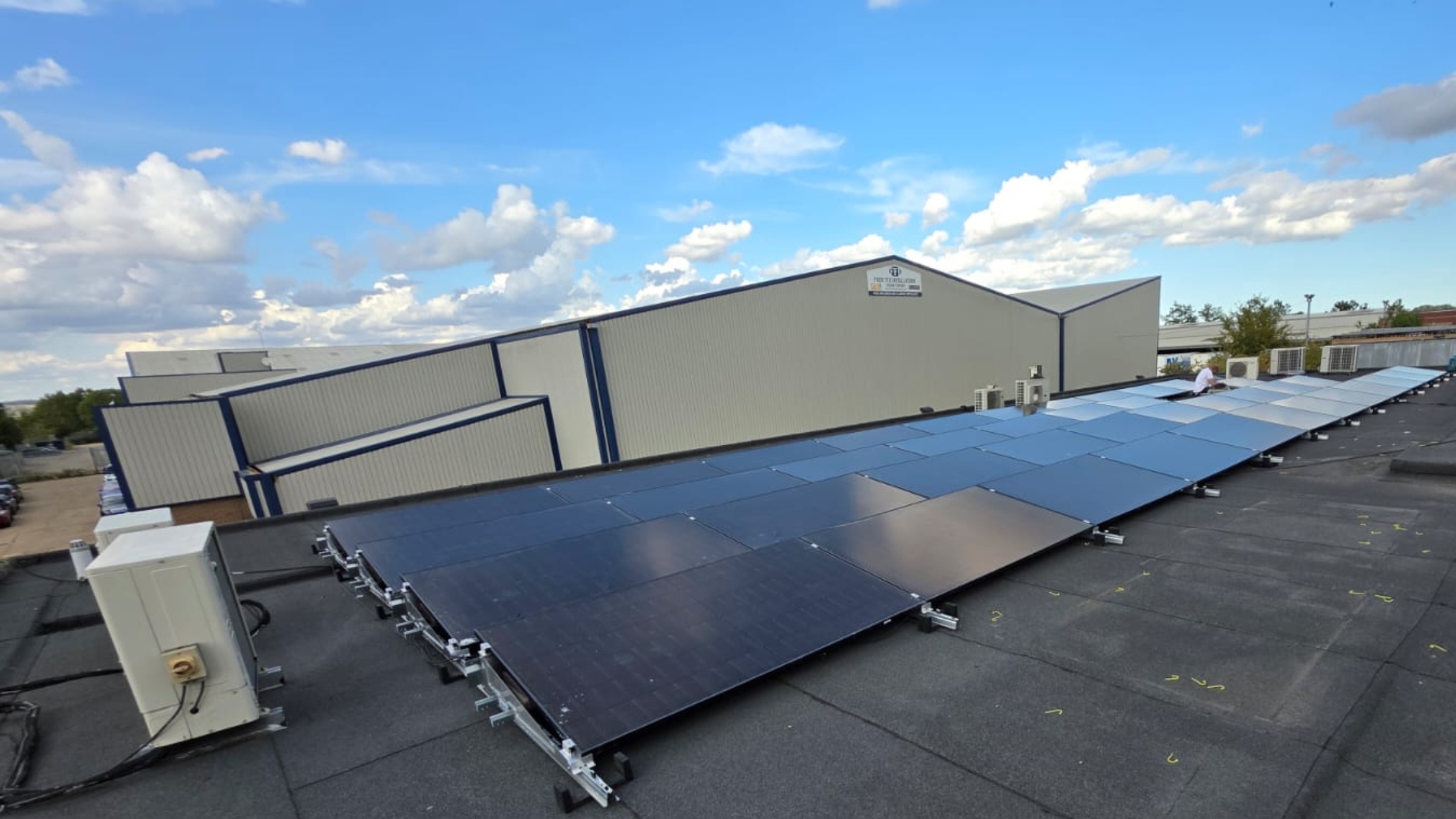
Yes. Flat roofs are very common on commercial and industrial buildings in Essex, and they are well-suited to solar installation using ballasted mounting systems that tilt panels to an optimal angle of around 10–15 degrees without penetrating the roof membrane. Ballasted systems are quick to install and do not affect roof warranties in the same way as penetrating systems. For roofs where weight loading is a concern, Senergy Direct carries out a structural assessment before installation. Flat roof commercial installations are one of Senergy Direct’s most common project types.
What Is a Power Purchase Agreement and Is It Right for Our Business?
A Power Purchase Agreement (PPA) is a financing arrangement under which a third party installs, owns, and maintains a solar system on your property, and you agree to purchase the electricity it generates at a fixed rate below the current grid price — typically for a period of 10 to 25 years. A PPA requires no upfront capital from the business and delivers immediate bill savings from day one. The trade-off is that you do not own the asset and cannot claim the capital allowances. PPAs suit businesses that want the benefits of solar without the capital outlay, or whose tax position means the capital allowance benefit is limited. Senergy Direct presents both outright purchase and PPA options where relevant.
How Long Does a Commercial Solar Installation in Essex Take?
From initial enquiry to a commissioned, generating system, a typical small commercial installation (under 30kWp) in Essex takes four to eight weeks. Larger installations requiring DNO approval may take ten to sixteen weeks or more, as the DNO application process is the primary variable. The physical installation itself takes one to five days depending on system size. Senergy Direct provides a detailed project timeline at the proposal stage, including realistic DNO lead times based on current UK Power Networks processing times.
Is Senergy Direct MCS-Certified for Commercial Installations?
Yes. Senergy Direct is fully MCS-certified for both residential and commercial solar panel and battery storage installations. MCS certification is a prerequisite for Smart Export Guarantee access and provides customers with the assurance that the installation meets rigorous design, installation, and safety standards. All Senergy Direct commercial installations are registered on the MCS database and customers receive a full MCS certificate upon completion, along with all electrical installation certificates and DNO confirmation documentation.
Disclaimer: This article is intended for general informational purposes only and does not constitute financial, tax, or legal advice. All costs, savings, ROI figures, tax relief details, and government scheme information are based on data available at the time of writing and are subject to change. Actual financial returns will vary depending on individual business circumstances, energy consumption, tariff structure, property characteristics, and tax position. Always seek professional financial and tax advice before making any capital investment decision. Senergy Direct accepts no liability for actions taken or not taken based on the contents of this article.

